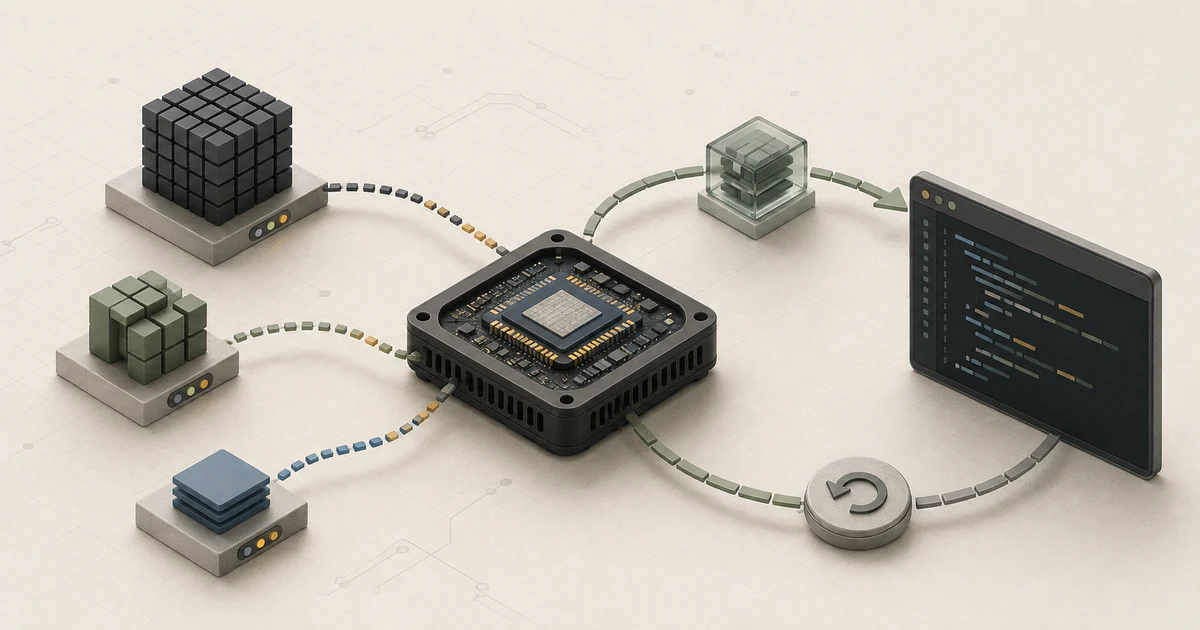
Hugging Face has made the open voice-agent stack much easier to assemble. speech-to-speech connects voice activity detection, transcription, a language model, and speech synthesis behind an OpenAI Realtime-compatible interface. The components are replaceable, and the complete path can run on hardware you control.
That is enough to justify a serious pilot. It is not yet enough to treat version 0.2.11 as a production voice service.
OpenSourceChoice verdict: use speech-to-speech 0.2.11 for prototypes, research, local devices, and bounded internal applications where the network is trusted and every model can be pinned. For an internet-facing or safety-relevant product, add an authenticated gateway, encrypted transport, deployment isolation, observability, capacity controls, and an application-specific speech benchmark before accepting traffic.
The most important current detail is version skew. Version 0.2.11 is the latest package published to PyPI, on July 17. WebRTC transport, device selection, an LLM proxy, and several lifecycle fixes landed on main after that tag. Those changes are promising, but they are not part of the stable package evaluated here.
Methodology: This is a researched technical assessment of version 0.2.11, the current repository, official model cards, package metadata, CI, deployment examples, issues, pull requests, and July adoption signals as observed on July 31, 2026. OpenSourceChoice did not run an end-to-end voice-quality, latency, load, privacy, or penetration test and does not present upstream demonstrations as independent benchmarks.
Why this matters now
The current interest is broader than one promotional post.
huggingface/speech-to-speechled GitHub Trending when checked on July 31, with 627 stars attributed to that day.- Hugging Face published a new Gemma 4, Parakeet, and Qwen3-TTS demonstration on July 1, turning the repository into a current reference stack for modular realtime voice.
- A high-engagement July 2 LocalLLaMA discussion focused on running the stack locally, interruption latency, hardware, and extending existing agents with speech.
- A separate July 16 community implementation used the project as a completely local study assistant and exposed practical questions about GPUs, model choice, and non-English transcription.
- The official PyPI package reached version 0.2.11 on July 17, while the repository continued active work through July 30.
These signals establish real developer interest. They do not establish production readiness. GitHub attention measures curiosity, and upstream demonstrations show what the maintainers can make work in a chosen environment. An adoption decision still depends on the exact microphone, language, noise profile, model, hardware, concurrency, privacy boundary, and failure behavior of the target product.
The timing is useful because open voice AI is becoming an integration problem rather than only a model problem. Fast transcription, compact local language models, expressive TTS, and realtime transports now exist separately. The difficult work is coordinating them without turns colliding, audio leaking, costs drifting, or latency becoming unpredictable.
What the project actually provides
speech-to-speech is an orchestration library and server, not a new speech model.
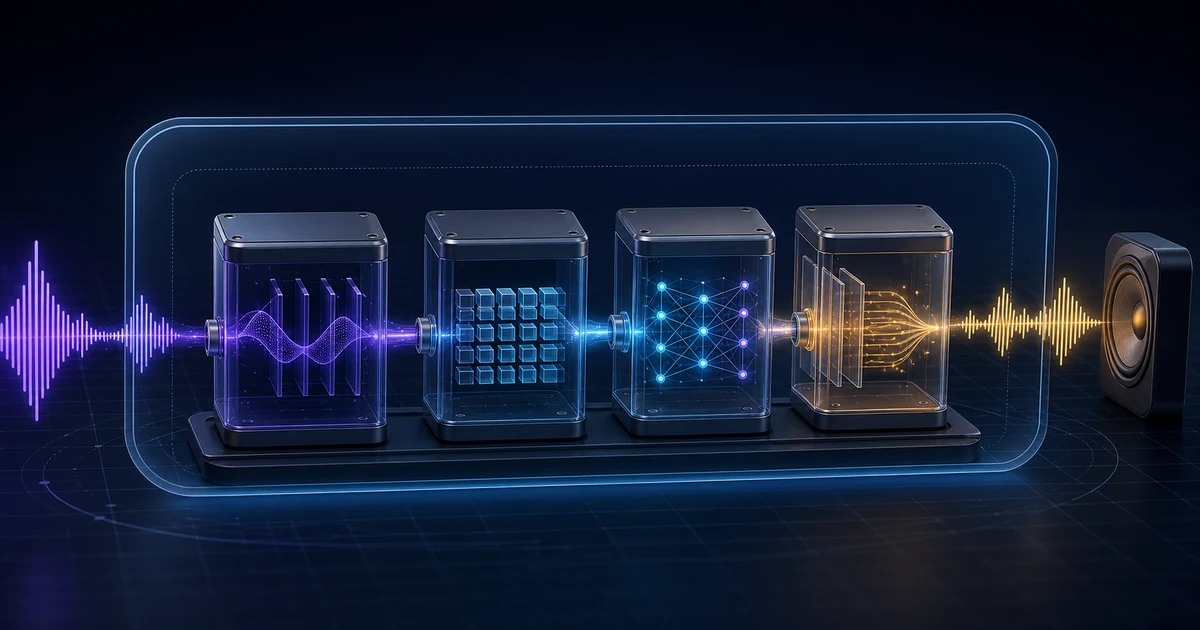
Its default architecture is a cascade:
- Silero VAD detects when a person starts and stops speaking.
- Parakeet TDT converts speech to text and can emit partial transcripts.
- An LLM backend generates text and tool calls through a local runtime or an OpenAI-compatible provider.
- Qwen3-TTS converts the response back to audio.
Each stage runs in its own thread and communicates through queues. The server coordinates turn state, streams partial results, and cancels stale output when the user interrupts. Applications can use the local microphone mode, raw TCP or WebSocket audio, or the OpenAI Realtime-compatible WebSocket endpoint.
This design solves a valuable problem: an application can keep one client protocol while changing the models behind it. A team can compare Parakeet with Whisper, a local Gemma model with a hosted API, or Qwen3-TTS with Kokoro without rewriting the entire conversation layer.
The compatibility boundary is narrower than “drop-in OpenAI replacement.” Version 0.2.11 implements a useful core of the Realtime event model, including audio input, session updates, response creation and cancellation, streaming transcripts, audio deltas, and tool calls. It does not promise every hosted API feature, operational control, or future protocol change.
It also does not provide:
- user accounts, tenant isolation, quotas, or a complete authorization layer;
- TLS termination or a hardened public ingress;
- a managed model registry or immutable deployment manifest;
- a universal hardware minimum for every backend combination;
- a quality guarantee across microphones, languages, accents, noise, and voices;
- durable conversation memory or application-specific retrieval by default;
- a production support contract for the complete third-party model chain.
Those are application and operations responsibilities.
Stable 0.2.11 is not the current main branch
PyPI identifies 0.2.11 as the latest published package and links it to the signed v0.2.11 source tag. The release added a substantial realtime web demo, a chat-completions LLM backend, Qwen3-TTS GGML defaults, Windows installation work, Docker fixes, and more resilient model warm-up behavior.
Development did not stop at the tag.
| Capability | Stable 0.2.11 | Current main on July 31 |
|---|---|---|
| OpenAI Realtime-compatible WebSocket | Included | Continued lifecycle and interruption fixes |
| Local microphone, raw WebSocket, and TCP modes | Included | Included |
| Realtime browser demo | Included | Device selectors and revised startup behavior |
| WebRTC media transport | Not included | Merged July 20 |
| LLM proxy endpoint for side tasks | Not included | Merged July 30; disabled by default |
| PyPI provenance | Trusted-publisher attestations for the tag | Not applicable until another package release |
The comparison from v0.2.11 to main contained more than 4,600 added lines across transport, proxy, demo, and test work when reviewed. That is too much behavioral change to treat a checkout from main as “0.2.11 plus a small fix.”
For a pilot, choose one of two honest paths:
- install and pin
speech-to-speech==0.2.11, then test only features in that package; or - pin an exact post-release commit because a main-only capability is required, and accept that the team owns extra regression and rollback work.
Do not deploy an unpinned branch or infer stable behavior from current README examples that describe unreleased code.
“Local” depends on the LLM configuration
The VAD, STT, and TTS defaults run locally. The quickstart still asks for an API key because the default LLM backend is a remote OpenAI-compatible API. In that configuration, raw microphone audio is processed by the local speech stages, but transcripts, prompts, conversation history, tool inputs, and generated text cross the selected provider boundary.
A fully local deployment needs a local LLM runtime such as llama.cpp, vLLM, Transformers, or MLX, plus local model files and loopback or private-network endpoints. The official local guide demonstrates this with Gemma 4.
That distinction affects both privacy and cost:
- Hosted LLM: lower local hardware burden and easier access to larger models, but recurring token charges, provider retention terms, network latency, and external availability become part of the voice experience.
- Local LLM: no per-token provider bill and a controllable data path, but the operator pays for hardware, electricity, model storage, upgrades, monitoring, and capacity.
- Hybrid: local speech with a remote LLM protects raw audio better than a completely hosted voice API, but it is not offline and does not keep the conversation private from the LLM provider.
Optional tools, web search, analytics, crash reporting, and model downloads create additional network paths. A “local” checkbox is therefore insufficient. A production review needs a data-flow diagram showing which bytes leave the device at every stage.
The real cost is latency engineering
A cascade is modular because it turns one hard model into several replaceable stages. It also creates several latency budgets:
- VAD must decide that the user has finished without cutting off natural pauses.
- STT must produce accurate partial text early enough to start useful work.
- The LLM must deliver the first useful tokens quickly.
- TTS must synthesize and stream faster than the listener consumes audio.
- Cancellation must stop obsolete text and audio when the user interrupts.
The project reports production use behind Reachy Mini robots, and Hugging Face’s July demonstration uses fast Cerebras-hosted Gemma 4 inference. Those are relevant implementation signals, not independent service-level evidence. The public material does not establish one end-to-end P50, P95, or P99 latency for version 0.2.11 across supported configurations.
Hardware sizing is similarly configuration-specific. The default path loads a 600-million-parameter STT model and a 1.7-billion-parameter TTS model before accounting for the language model, audio buffers, Python runtime, and concurrency. The Parakeet model card documents at least 2 GB of RAM merely to load that component, while the complete voice loop needs more.
The official Docker example assumes the NVIDIA Container Toolkit and a GPU. On Linux, Qwen3-TTS wheels are CUDA-runtime-specific; the documentation provides separate CUDA 12.4, CUDA 13, and CPU installation paths. Apple Silicon uses MLX-specific packages. Windows received installation work in 0.2.11, but the project’s install-smoke CI currently covers Linux and macOS ARM, not Windows.
There is no responsible universal statement such as “runs on any laptop.” A team must size the exact STT, LLM, TTS, quantization, context, and concurrent-session combination it plans to operate.
Security is an integration responsibility
The repository has several positive supply-chain controls:
- Apache 2.0-licensed source;
- automated Ruff, formatting, type, test, package-build, and install-smoke jobs;
- PyPI trusted publishing with provenance attestations for 0.2.11;
- pinned action revisions in the publishing workflow;
- active tests around response state, cancellation, and post-release WebRTC and proxy work.
Important production controls are outside the package:
- the Realtime example uses
api_key="not-needed"; - raw socket and WebSocket examples can bind to
0.0.0.0; - the Docker Compose example publishes model and audio ports to the host;
- the llama.cpp container reference is not pinned to an immutable digest;
- the example does not add TLS, user authorization, tenant boundaries, or network policy;
- the repository has no
SECURITY.mdor documented private vulnerability-reporting path; - no public repository security advisory was listed when checked;
- CI does not run a Python dependency vulnerability audit, and Dependabot is configured only for GitHub Actions.
The LLM proxy merged after 0.2.11 makes the boundary even more explicit. Current upstream documentation says the server itself does not authenticate or throttle proxy callers and instructs operators to put it behind a gateway. The feature is off by default, but an accidental public exposure could turn a provider key held by the server into billable, unauthenticated inference.
A production topology should place the voice engine on a private network behind an authenticated, rate-limited, TLS-terminating gateway. Restrict egress to approved model and provider endpoints, keep provider keys server-side, pin containers and model revisions, and separate tenants at the process or workload level until isolation has been demonstrated.
Voice adds risks beyond ordinary text chat. Transcripts can contain personal data, TTS can be mistaken for a real person, and tool calls can turn a transcription mistake into an action. High-impact commands need explicit confirmation in a separate trusted interface. Voice cloning or custom voices also require consent, provenance, and abuse controls that this orchestration layer does not supply automatically.
License and portability are better than the operational lock-in
The pipeline code is Apache 2.0. Its default components use separate licenses: Silero VAD is MIT, Parakeet TDT 0.6B v3 is CC BY 4.0, and the referenced Qwen3-TTS model is Apache 2.0. The current Gemma 4 GGUF suggested by the project is also marked Apache 2.0.
That is a relatively workable commercial foundation, but the operator must retain the attribution and notice obligations of every model and library actually shipped. Optional backends can have different terms. A permissive orchestrator license does not override a model card, training-data restriction, voice-consent obligation, or provider contract.
Protocol compatibility reduces application lock-in. Clients can keep a Realtime-shaped interface while the operator changes the LLM backend. Model lock-in still appears through:
- backend-specific command flags and prompt behavior;
- CUDA, MLX, GGML, and wheel compatibility;
- language and voice quality that differs by checkpoint;
- tool-call formats and reasoning controls;
- model caches, warm-up behavior, and hardware sizing;
- hosted-provider semantics that are only approximately OpenAI-compatible.
Portability is strongest when the deployment records an exact package version, model revision, quantization, container digest, prompt, voice, and benchmark corpus. Without that manifest, “swappable” can become “rebuild and retest every layer.”
Maturity: active, concentrated, and still moving quickly
The repository is not abandoned. Git history showed 56 commits from July 1 through July 30, with merged work on the release, demo, WebRTC, interruption handling, MLX concurrency, and the LLM proxy. GitHub search showed 85 open issues and 40 open pull requests on July 31, plus six issues closed since July 1.
Maintenance is concentrated. Forty-three of the 56 July commits were attributed to the same primary maintainer identity, with a second contributor responsible for five. External contributions are landing, but architecture and release knowledge remain heavily centered.
These observations are not a quality score. They describe operational risk:
- rapid development can fix important problems quickly;
- a large post-release delta increases upgrade testing;
- a busy issue and PR queue can delay edge-platform fixes;
- maintainer concentration raises continuity risk for a system that may sit on the critical interaction path.
Version 0.2.11 should therefore be treated as an early production candidate for teams prepared to own the service, not as a mature appliance.
Alternatives to evaluate in parallel
| Alternative | Better fit | Main trade-off |
|---|---|---|
| LiveKit Agents with self-hosted LiveKit | Multi-user rooms, WebRTC infrastructure, telephony, authorization, and production media operations | More infrastructure; local model orchestration still needs deliberate configuration |
| Pipecat | A broader voice-agent framework with many transports, providers, processors, and production integrations | A larger integration surface and less opinionated local defaults |
| sherpa-onnx | Offline, cross-platform speech recognition and synthesis where an LLM conversation server is not required | It is a speech runtime toolkit, not a complete Realtime-compatible agent loop |
| A hosted Realtime API | Fast product validation with managed scaling and less GPU operations work | Recurring cost, provider dependency, and a wider external data boundary |
| A purpose-built local pipeline | Regulated or embedded products that need a minimal, audited component set | More engineering and less ability to swap models quickly |
The strongest comparison is not “open source versus cloud.” It is operational scope. speech-to-speech is attractive when a modular local cascade and protocol-shaped server are the primary needs. LiveKit or Pipecat may be a better foundation when media routing, telephony, sessions, and deployment operations dominate.
A practical evaluation plan
1. Freeze one reproducible stack
Start with speech-to-speech==0.2.11, not main. Record exact VAD, STT, LLM, and TTS model revisions; quantization; Python version; GPU driver; CUDA or MLX runtime; prompt; voice; and client commit. Mirror required artifacts if offline recovery matters.
2. Build a representative speech corpus
Collect consented recordings for every target language, accent, microphone, speaking style, and noise condition. Include interruptions, overlapping speech, long pauses, names, addresses, numbers, domain terms, and adversarial phrases that could resemble commands.
Measure:
- word error rate and critical-entity error rate;
- false VAD starts and clipped turns;
- time to first transcript, first LLM token, and first audio;
- end-to-end P50, P95, and P99 turn latency;
- interruption stop time and stale-audio leakage;
- TTS intelligibility and pronunciation through blinded human review.
Do not adopt on a pleasant demo voice. Adopt on a documented corpus and threshold.
3. Test the privacy boundary
Run once with every component local and capture outbound traffic. Then enable each remote provider or tool separately. Confirm whether audio, transcripts, prompts, tool arguments, telemetry, and model identifiers match the approved data-flow diagram.
Fail the pilot if a supposedly local profile sends conversation content outside the approved network.
4. Harden and attack the service
Put the engine behind the intended gateway. Test anonymous connections, expired credentials, replay, oversized audio frames, connection floods, session exhaustion, malformed events, provider-key leakage, cross-tenant state, and tool-call confirmation. Verify that logs do not retain sensitive audio or transcripts by accident.
5. Load, fail, and recover
Test the expected concurrent sessions plus headroom. Kill each model process, disconnect the provider, exhaust GPU memory, fill the model cache, and restart during an active turn. Confirm bounded queues, clear user errors, no zombie audio, and deterministic recovery.
6. Define adoption gates
A reasonable production gate is:
- target-language critical-entity accuracy meets the product threshold;
- P95 first-audio latency stays below the product’s conversational budget;
- interruption stops obsolete audio within the measured limit;
- no unapproved egress occurs in the local profile;
- anonymous and cross-tenant access tests fail closed;
- one instance loss does not lose credentials or block recovery;
- the exact pinned stack can be rebuilt from a clean machine;
- a rollback to the previous manifest preserves client compatibility.
Reject or narrow the deployment if any safety-relevant command can execute from an unconfirmed transcript.
Who should adopt it—and who should wait
Good pilot candidates: robotics teams, local-AI researchers, accessibility prototypes, interactive installations, and developers who need to compare speech and language models behind one realtime interface.
Adopt for a bounded internal role: teams with GPU or Apple Silicon capacity, a trusted network, measured language requirements, and the ability to operate an authenticated gateway around the engine.
Wait or use a broader production platform: public SaaS products, contact centers, telephony workloads, regulated multi-tenant systems, safety-critical controls, and teams that cannot own GPU capacity, model licensing, voice testing, and realtime incident response.
Hugging Face Speech-to-Speech is relevant because it turns a scattered open voice stack into a coherent, replaceable pipeline. Version 0.2.11 is mature enough to evaluate and young enough that the evaluation must include the infrastructure around it. The winning adoption path is not “install the trending repository.” It is to pin one complete stack, measure real speech, prove the network boundary, and let production scope grow only after the cascade earns it.
Sources
Primary sources were accessed on July 31, 2026 unless another date is stated.
- Hugging Face Speech-to-Speech repository — Hugging Face; architecture, installation, supported backends, activity, license, issues, and pull requests.
- Speech-to-Speech v0.2.11 source tag — Hugging Face; stable source snapshot published July 17, 2026.
- Speech-to-Speech 0.2.11 on PyPI — Python Package Index and Hugging Face; current stable version, Python requirement, files, hashes, and trusted-publisher provenance.
- Changes after v0.2.11 — Hugging Face; unreleased WebRTC, demo, lifecycle, MLX, and LLM-proxy changes.
- OpenAI Realtime engine documentation — Hugging Face; implemented events, transport behavior, turn state, cancellation, and WebRTC documentation.
- Docker Compose deployment example — Hugging Face; llama.cpp, Gemma 4, GPU, ports, and network defaults.
- Continuous integration workflow — Hugging Face; lint, type, test, package, and platform smoke-test coverage.
- Dependabot configuration — Hugging Face; current dependency-update scope.
- Apache 2.0 license — Hugging Face; pipeline source license.
- Hugging Face and Cerebras bring Gemma 4 to real-time voice AI — Hugging Face and Cerebras; published July 1, 2026; project-produced architecture and deployment claims.
- Reachy Mini goes fully local — Hugging Face; current local installation, model choices, privacy claims, and backend trade-offs.
- Parakeet TDT 0.6B v3 model card — NVIDIA; supported languages, license, requirements, training data, and project-published evaluations.
- Qwen3-TTS 1.7B CustomVoice model card — Qwen; default TTS model, Apache 2.0 license, capabilities, and usage.
- Gemma 4 E4B GGUF model page — ggml-org and Google DeepMind; local llama.cpp artifact and Apache 2.0 license.
- Silero VAD repository — Silero Team; VAD implementation, requirements, and MIT license.
- LiveKit Agents, Pipecat, and sherpa-onnx — official repositories for the alternatives evaluated in parallel.
Discovery and interest signals, not used as sole evidence for technical claims:
- GitHub Trending —
huggingface/speech-to-speechled the daily list when observed on July 31, 2026. - Talking with Gemma 4 31B — independent LocalLLaMA discussion from July 2, 2026 about local operation, latency, hardware, and extensions.
- A completely local study tool built with speech-to-speech — independent implementation discussion from July 16, 2026.
Build a stack for this use case.
Answer nine practical questions and compare three transparent architectures with costs, free limits, lock-in, and migration paths.
Build my stack