Buzz has a compelling premise: put people, AI agents, chat, workflows, and Git activity in one signed event stream instead of connecting separate tools with brittle bots. The implementation is substantial, the repository is moving quickly, and Block released Buzz Desktop v0.5.4 on August 3, 2026. That does not make it ready to become a company's primary collaboration or source-code system.
The practical verdict is narrower. Buzz is worth a controlled pilot for a technically capable team using non-sensitive data. It is not yet a responsible default for regulated records, production credentials, proprietary crown-jewel code, or a company-wide Slack and Git replacement. The largest risk is not that the project is fake or inactive. It is that a pre-1.0 product combines a wide data surface, coarse authorization, fast-changing components, and an operationally central relay before its approval, support, recovery, and public-client story has matured.
This is a researched technical analysis as of August 4, 2026. OpenSourceChoice reviewed the current release, repository and commit activity, architecture, security policy, license, self-hosting path, deployment configuration, public artifacts, issues and pull requests, governance, and independent interest signals. We did not deploy Buzz, audit its code, or send company data through it. Maintainer claims and our editorial inferences are identified accordingly.
Executive verdict
- Pilot it if your team wants to evaluate agent collaboration in a disposable project and can operate a Rust service plus PostgreSQL, Redis, object storage, TLS, backups, identity keys, and model-provider controls.
- Do not adopt it as a system of record yet. The project is pre-1.0, security fixes land on
mainfirst, previous releases receive best-effort support, and the repository documents unfinished approval and client work. - Treat the relay and its operator as trusted. Signed events prove authorship and integrity; they do not automatically make ordinary workspace content end-to-end encrypted from the server that stores, searches, and automates it.
- Keep agents in dedicated channels with synthetic or low-sensitivity data. Channel membership is the documented authorization boundary, with no separate capability taxonomy.
- Evaluate Mattermost plus Forgejo in parallel. That combination is less unified and more integration-heavy, but it separates mature chat and Git responsibilities and offers a more conservative migration path.
Why this matters now
The timing rests on multiple signals rather than one launch post.
Block introduced Buzz publicly on July 21. A self-hosting guide followed on July 31, and the latest non-prerelease desktop build, v0.5.4, was published on August 3. The release includes Windows-install hardening, key-backup path fixes, Kubernetes deployment work, provider configuration fixes, and dependency updates for several RustSec advisories. Those are useful improvements, but they also show that deployment, key custody, provider configuration, and platform packaging are still active construction zones.
The repository appeared in GitHub's weekly Trending list when checked on August 4, while new commits and pull-request updates were landing the same day. The launch also generated a heavily discussed Hacker News thread and a current Product Hunt launch. An official X post amplified it. These are interest signals only; they do not prove security, maturity, or adoption quality. Checks of Reddit, Lobsters, and XDA did not provide comparably strong independent technical evidence, so they were not used to strengthen the conclusion.
The editorial opportunity is therefore not another launch summary. It is the decision teams must make after the attention: what data can safely enter Buzz today, what must remain outside, and what evidence should a pilot produce before any wider rollout?
The problem Buzz is trying to solve
Agent deployments usually fragment context. A conversation happens in chat, code lives in a forge, approvals sit in a ticketing system, model prompts travel through a separate harness, and the final decision is difficult to reconstruct. An agent often has either too little context to help or an overpowered token that reaches far more than one task needs.
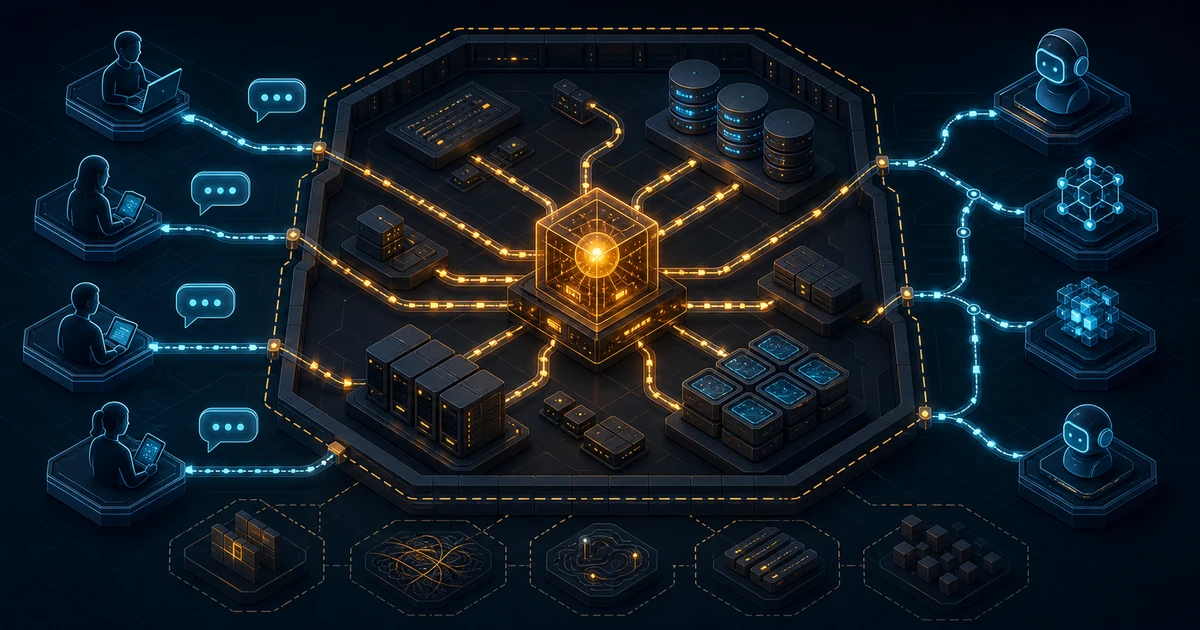
Buzz attempts to make humans and agents first-class principals in the same workspace. Each has a Nostr keypair. Messages, reactions, workflow steps, reviews, Git events, canvases, and other actions are represented as signed events. Agents connect through the Agent Client Protocol harness, and channel membership scopes which conversations they may read and write.
That unified event model is the project's strongest idea. It can make provenance visible and preserve the relationship among a request, an agent's work, a patch, and a decision. It can also reduce some integration glue because the relay, search, workflows, media, and Git bridge understand the same event model.
The same unification raises the stakes. A single workspace may accumulate chat history, code, media, agent instructions, usage records, approval events, and operational metadata. Compromise or misconfiguration has a broader blast radius than failure in a narrow bot integration.
What works, and what does not
The current repository lists the relay, channels, threads, direct messages, canvases, media, search, audit log, desktop client, CLI, ACP harness, and several YAML workflow triggers as working today. Packaged desktop artifacts exist for Apple silicon and Intel Macs, x86-64 Linux, and x86-64 Windows.
The boundaries matter more than the feature count:
- workflow approval gates are documented as still being wired end to end;
- the repository's architecture document says some workflow actions remain unimplemented;
- the Windows installer is explicitly named
alpha-unsigned, and the README warns that SmartScreen may intervene; - the official repository describes mobile clients as being wired up, while a Block engineering post describes iOS and Android clients and the source tree is active. The
v0.5.4release itself publishes desktop artifacts, not public mobile packages; - push notifications remain pending in the project overview;
- the Git forge is a native part of the design, but it is much younger than dedicated forges.
This is not criticism for lacking every enterprise checkbox at launch. It is a reason to keep the adoption claim proportional to what is shipped and supportable now.
Architecture: one relay, not a decentralized mesh
Buzz uses the Nostr event format, but its documented workspace architecture is intentionally centralized:
- Desktop, mobile, web, CLI, and agent clients connect to one
buzz-relayover WebSocket or HTTP. - The relay authenticates identities, verifies signatures, enforces channel membership, stores events, fans out updates, indexes search, appends audit records, and triggers workflows.
- PostgreSQL stores events, channels, membership, workflows, tokens, search data, and audit records.
- Redis handles presence and multi-process fan-out.
- an S3-compatible store such as MinIO holds media and Git objects, while a separate Git volume is part of the Compose deployment.
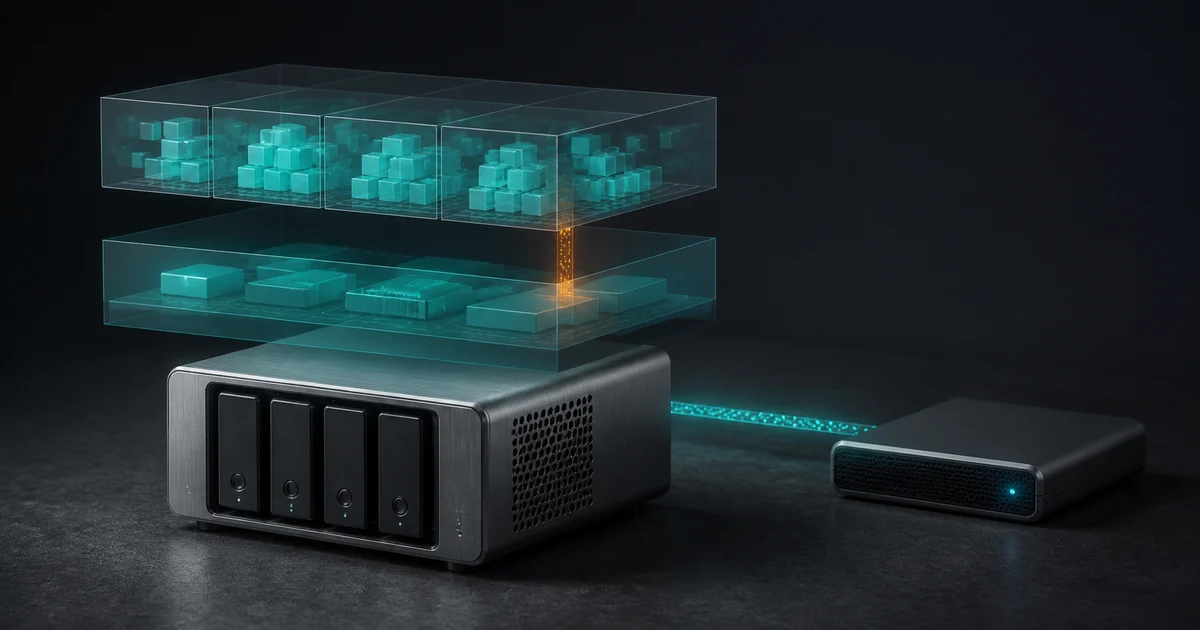
The relay is explicitly the single source of truth. There is no peer-to-peer workspace replication or Nostr-style gossip among multiple independent relays. The default self-hosted boundary is one host, one relay, one community. This simplifies consistency and policy enforcement, but the relay remains a central availability, confidentiality, and recovery dependency.
Nostr signatures provide useful answers to “who signed this event?” and “was this event changed after signing?” They do not answer “who can read the stored content?” The relay performs full-text search over ordinary event content and triggers automations from it. Some specific paths, such as agent telemetry, memory, cost records, direct-message formats, and read-state data, use encryption according to their respective design documents. It would be unsafe to generalize those protections to every message, attachment, Git object, workflow input, or search record.
OpenSourceChoice inference: unless a current event kind is explicitly documented and tested as encrypted for the intended recipients, treat its content and metadata as visible to the relay operator and to any infrastructure administrator who can access the relevant data store. Self-hosting changes who operates that trust boundary; it does not remove it.
Access control and agent risk
Buzz's security policy is unusually direct: channel membership is the only access-control gate. There are no independent ACL lists or capability taxonomies. A human or agent in a channel can read and write there; a non-member should be rejected and private channels should remain undiscoverable.
That model is understandable and auditable, but it is coarse for powerful agents. Membership does not by itself constrain what a model provider receives, what local tools an ACP harness can invoke, what secrets exist in the agent's environment, or what an outbound workflow may send. Those boundaries come from the harness, host sandbox, provider configuration, workflow design, and operator discipline.
The current security design has useful controls:
- NIP-42 challenge/response for WebSocket authentication and NIP-98 signatures for HTTP requests;
- OS keyring storage for desktop private keys, with an owner-only file fallback on headless Linux;
- SSRF checks and response-size limits for outbound workflow calls;
- Rust crates configured to deny unsafe code and dependency scanning through
cargo audit; - private-channel subscription checks and signed events;
- separate identities for agents, enabling revocation and attribution.
It also documents important limitations:
- a
BUZZ_PRIVATE_KEYenvironment variable overrides other stores, which puts CI and agent-host secret handling in scope; - TLS must be terminated by the operator because the relay does not enforce it itself;
- the audit hash chain is tamper-evident, not tamper-resistant. A database writer can alter history and recompute the chain;
- pre-1.0 releases have no long-term-support branch, and previous releases receive best-effort fixes;
- the published security page showed no public repository advisories when checked on August 4, but absence of advisories is not evidence of absence of vulnerabilities.
The v0.5.4 release updates Nostr dependencies for several 2026 RustSec records. The release notes do not establish that every record was exploitable in Buzz, so the correct conclusion is simply that maintainers updated affected dependency ranges—not that the release closes a verified Buzz exploit.
The real self-hosting cost
Buzz is Apache-2.0 software, so there is no license fee for commercial use, modification, or self-hosting under the license's terms. The operating cost is not zero.
The official single-node bundle requires Docker Compose v2.24.4 or newer and runs the relay with PostgreSQL, Redis, MinIO, a Git data volume, and optional Caddy for TLS. A production owner must provide at least:
- a maintained Linux host, DNS, TLS, firewalling, monitoring, and patching;
- stable relay, owner, database, Redis, S3, and webhook secrets;
- coordinated backups of PostgreSQL, object storage, the Git volume, configuration, identity keys, and Caddy state;
- upgrade rehearsal, schema migration control, rollback, and restore tests;
- capacity planning for message history, Git objects, media, search, agent concurrency, and model traffic;
- incident response for leaked keys, compromised agent hosts, provider exposure, and inappropriate channel membership;
- model or API costs unless every selected harness runs entirely on controlled local compute.
The default Compose image follows main for early testing. The documentation recommends pinning an immutable commit image or release tag for production. That is a crucial distinction: a reproducible pilot must not pull a moving branch at each restart.
Identity makes recovery more delicate than restoring a typical stateless app. Rotating the relay key changes the relay's advertised identity, invalidating expectations that pinned the old key. The exact RELAY_URL participates in workspace identity; changing scheme, host, or port can produce what clients perceive as a different community. The owner key is also a durable control-plane credential. Backups therefore need a documented key-custody and domain-recovery procedure, not only database snapshots.
Privacy and data flow questions to answer first
Before connecting a real repository, map every data path:
| Data | Primary destination | Question to prove |
|---|---|---|
| Channel events and search | Relay and PostgreSQL | Which event kinds are plaintext, encrypted, indexed, retained, and deletable? |
| Media and Git objects | S3-compatible store and Git volume | Are server-side encryption, retention, access logs, and restore procedures configured? |
| Agent prompts and outputs | Agent host and selected model provider | What context leaves the relay, under which account, region, retention policy, and training policy? |
| Identity keys | OS keyring, protected file, or environment | Who can export, rotate, revoke, restore, and audit each human and agent key? |
| Workflow calls | External webhook targets | Which destinations are allowed, what fields are sent, and how are secrets redacted? |
| Logs and telemetry | Relay, proxy, containers, agent hosts | Can prompts, tokens, code, identifiers, or credentials appear in logs? |
“Self-hosted” answers only the first question of server control. It does not guarantee local inference, end-to-end encryption, data residency across model providers, or minimal retention. Those properties must be configured and verified independently.
License, governance, and lock-in
Buzz uses the permissive Apache License 2.0. Organizations may use and modify it commercially, subject to the license's copyright, notice, patent, and trademark provisions. There is no network-source disclosure requirement comparable to the AGPL.
Governance remains centered on Block. The repository points to Block's organization-wide model: maintainers approve and merge changes, while Block's Open Source Governance Committee has final authority over technical direction, policy, and repository hosting. Recent activity shows many active contributors and a high change rate, but it is too early to infer long-term maintainer diversity or a stable independent governance base. The practical bus-factor concern is therefore institutional concentration rather than a single hobby maintainer.
The Nostr event format and ordinary Git repositories provide useful portability. Agent identities are key-based, and code can be mirrored to another Git forge. That does not make a full Buzz workspace automatically portable. Custom event kinds, workflows, channel structure, search indexes, media references, audit semantics, and relay identity are Buzz-specific operational state.
A pilot must prove export and reconstruction, not merely assume protocol portability. The exit test should answer whether a team can recover Git history, human-readable conversations, attachments, membership, decisions, and audit evidence in another system without keeping the original relay running indefinitely.
Where Buzz can provide value now
Good early candidates have high coordination value and low data sensitivity:
- an open-source project already comfortable with public code and public discussions;
- a disposable internal prototype with synthetic issues and repositories;
- an agent-workflow research group measuring provenance and handoffs;
- a small engineering team evaluating separate identities for multiple agents;
- a local lab testing Nostr-signed collaboration and ACP interoperability.
Poor candidates include:
- regulated health, financial, legal, government, or employee records;
- production secrets, signing keys, customer exports, or incident evidence;
- source code whose compromise would be existential to the company;
- organizations that require LTS releases, signed Windows deployment, formal support, granular data-loss prevention, or independently validated compliance controls;
- teams without an owner for databases, object storage, TLS, backups, monitoring, key custody, and model-provider governance.
Alternatives to evaluate in parallel
| Option | Stronger fit | Trade-off versus Buzz |
|---|---|---|
| Mattermost + Forgejo | Conservative self-hosted chat and Git separation | More integration work; agents are not native workspace principals |
| Zulip + Forgejo | Structured asynchronous discussions and portable Git | Less unified event and automation model |
| GitLab Community Edition | Repository, review, CI, permissions, and operational maturity | Heavier platform; collaborative chat and external agents remain separate |
| Matrix + Forgejo | Federated communication and mature encrypted-room options | More protocol and integration complexity; no single agent-workspace model |
The parallel alternative should not imitate every Buzz feature. Its purpose is to reveal whether the unified model creates enough measurable value to justify Buzz's additional maturity and trust-boundary risk.
A safe two-week evaluation plan
1. Freeze the scope
Use one synthetic repository, five or fewer pilot users, separate test identities, and one restricted agent. Exclude production credentials, customer data, internal security reports, and proprietary source. Write the prohibited-data list before onboarding.
2. Build a reproducible relay
Pin the relay image to an immutable digest or tested commit. Terminate TLS, close unused ports, use dedicated database and object-store credentials, enable log rotation, and record every version. Do not expose an instance that still contains placeholder secrets.
3. Map and constrain egress
Capture DNS and network destinations from the relay and agent host. Use a dedicated model-provider project with a spending cap and an explicit data policy. Verify exactly which channel context enters each prompt. Block unexpected webhook and model destinations.
4. Exercise identity and authorization
Create two human identities and two agent identities. Test private-channel discovery, reading, writing, removal, revocation, and stale sessions. Confirm that a removed agent loses access and that its host no longer retains active credentials.
5. Prove backup and restore
Back up the relay configuration and identity, owner key, PostgreSQL, S3/MinIO content, and Git volume from one maintenance window. Restore to an isolated network and verify channels, Git objects, attachments, membership, search, and signatures. Test domain and certificate recovery without casually rotating the relay identity.
6. Test the exit path
Mirror Git repositories to Forgejo or GitLab. Export representative conversations, decisions, attachments, and identity mappings into durable formats. Confirm that the team can understand the project after the Buzz relay is unavailable.
7. Measure value and failure
Compare the pilot with the parallel stack using predeclared criteria:
- every agent action has an attributable identity and a recoverable evidence trail;
- no test principal reads or writes outside its authorized channels;
- no prohibited field appears in model requests, logs, traces, or object metadata;
- backup restoration meets the team's recovery point and recovery time objectives;
- Git mirroring and workspace export are complete enough to exit;
- the integrated workflow reduces measurable handoff time or tool switching;
- operators can upgrade and roll back the pinned build without data loss;
- no critical pilot dependency relies on a feature the repository marks unfinished.
Reject wider adoption if any confidentiality, authorization, restore, or exit test fails. A successful demo is not a substitute for these gates.
OpenSourceChoice assessment
- Best for: open-source maintainers, research teams, and advanced small engineering groups that can run a non-sensitive, reversible agent-collaboration pilot.
- Not for: regulated workloads, company-wide migration, crown-jewel code, or teams seeking a supported turnkey replacement for established chat and Git systems.
- Why now: Block shipped
v0.5.4on August 3 after a July launch and self-hosting guide, while GitHub activity and independent discussion remain unusually high. - Real cost: a relay plus PostgreSQL, Redis, object/Git storage, TLS, monitoring, backup, key custody, upgrades, agent hosts, and potentially model API or GPU spend.
- Main risk: a broad data surface converges on a fast-moving central relay with coarse authorization and incomplete operational and approval maturity.
- Production gate: prove data classification, provider egress, channel isolation, key revocation, a full restore, immutable deployment, and an exit export.
- Parallel alternative: Mattermost plus Forgejo for a more conservative separation of chat and code.
- Recommendation: run a two-week pilot with synthetic or public data, then require hard evidence before expanding scope. Do not move sensitive company data into Buzz merely because the software is open source or self-hostable.
Sources
Primary sources were accessed on August 4, 2026 unless another date is stated.
- Buzz Desktop v0.5.4 release notes — Block and Buzz maintainers; released August 3, 2026; current non-prerelease desktop version, packaged platforms, fixes, dependency updates, and deployment changes.
- Buzz repository — Block and Buzz contributors; current source, commit activity, issue and pull-request state, project status, and installation paths.
- Buzz README at the reviewed commit — Buzz maintainers; working, unfinished, and planned surfaces; public artifacts and Windows warning.
- Buzz architecture at the reviewed commit — Buzz maintainers; relay topology, event pipeline, persistence, search, agents, infrastructure, and known limitations.
- Buzz security policy — Buzz maintainers; supported versions, authentication, authorization, key storage, transport, audit, workflow, and disclosure model.
- Buzz Docker Compose deployment guide — Buzz maintainers; single-node dependencies, image pinning, migration, TLS, secrets, and backup guidance.
- Buzz Compose operator script — Buzz maintainers; coordinated backup checklist for identity, databases, object and Git storage, and proxy state.
- Buzz Apache 2.0 license — Block, Inc.; current use, modification, distribution, patent, notice, and trademark terms.
- Block open-source governance — Block; maintainer responsibilities and Governance Committee authority.
- Buzz! launch article — Block Engineering; published July 21, 2026; project rationale, Nostr and ACP model, encrypted agent paths, internal-use claims, and acknowledged early state.
- Run your own Buzz relay — Block Engineering; published July 31, 2026; current self-hosting topology, keys, relay URL identity, TLS, migration, backup, and upgrade guidance.
- A Buzz on your phone — Block Engineering; published July 29, 2026; maintainer description of the mobile design and agent authorization model.
- NIP-42 relay authentication and NIP-98 HTTP authentication — Nostr protocol specifications; authentication mechanisms used by Buzz.
- Mattermost repository, Forgejo documentation, Zulip repository, and Matrix specification — primary project sources for the comparison set.
Trend and community context:
- GitHub Trending — weekly list observed August 4, 2026; discovery signal, not technical evidence.
- Hacker News launch discussion — July 21, 2026; independent interest and critical discussion, not a primary source for technical claims.
- Buzz on Product Hunt — current launch-week interest observed August 4, 2026; discovery signal only.
- Official Buzz launch post on X — July 21, 2026; launch amplification, not technical evidence.
All technical conclusions above are OpenSourceChoice editorial analysis derived from the cited release, source, documentation, specifications, and deployment materials. They are not claims of hands-on operation, an independent security audit, or a compliance certification.
Build a stack for this use case.
Answer nine practical questions and compare three transparent architectures with costs, free limits, lock-in, and migration paths.
Build my stack