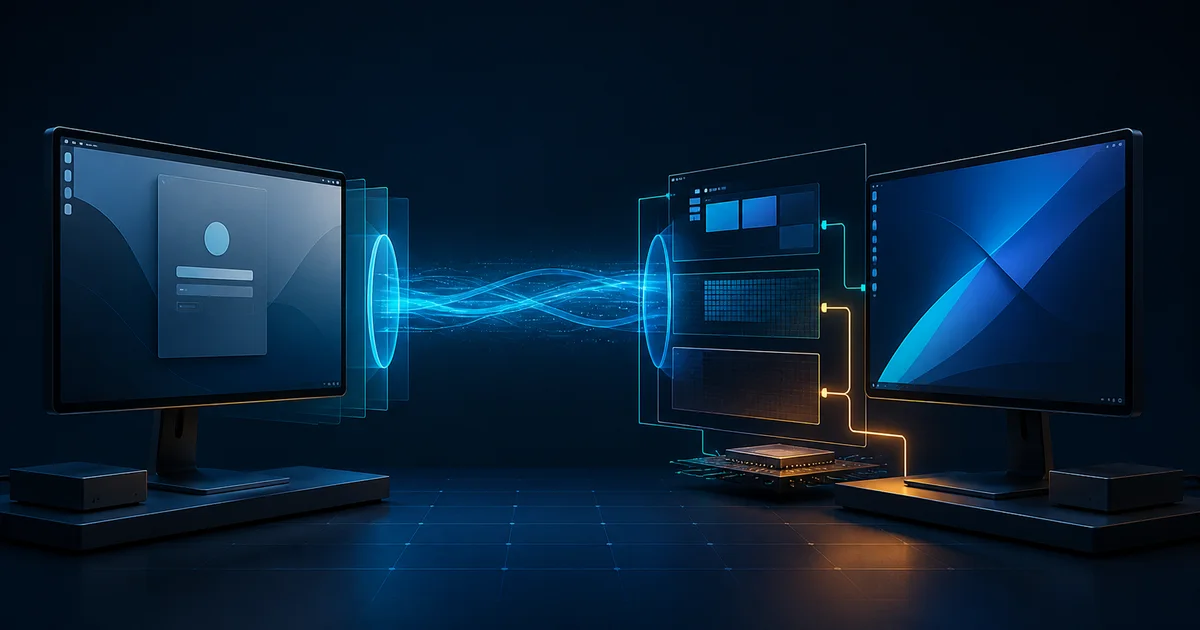
RustDesk has removed one of the biggest practical blockers for remote Linux support: its new preview can connect to a Wayland machine without someone approving a portal dialog at the remote screen. The project says the build also reaches the login screen after reboot and supports multiple monitors.
That is an important engineering step, not a production-ready default. The feature is absent from the current stable 1.4.9 release. It ships as a separate rolling-nightly .deb for x86-64 Debian and Ubuntu systems, replaces the stock package, reads the active display through a privileged DRM/KMS path, and was still receiving login-screen and retry fixes in the two days before this analysis.
OpenSourceChoice verdict: pilot the RustDesk Wayland preview only on a small set of single-user, physically controlled machines with a proven out-of-band recovery path. Keep stable 1.4.9 or a native desktop alternative ready for rollback. Do not deploy the preview fleet-wide until its package provenance, privilege boundary, display matrix, relay behavior, and unattended recovery pass your own tests over multiple daily builds.
This is a researched technical analysis, not a hands-on remote-session test. OpenSourceChoice reviewed the August 14 announcement, current preview package, merged implementation and follow-up changes, stable releases, repository activity, Linux and self-hosting documentation, security policy, dependency state, open issues, and current alternatives. We did not install the privileged package or control a Wayland host through it.
Executive verdict
| Question | OpenSourceChoice assessment |
|---|---|
| Who should evaluate it | Linux administrators with unattended Debian/Ubuntu desktops, a disposable pilot host, and independent recovery access |
| Who should wait | Shared workstations, regulated fleets, ARM systems, non-Debian distributions, and teams that require a stable support contract |
| Current stable client | RustDesk 1.4.9, released July 6, 2026; it does not include the new unattended Wayland backend |
| Current feature package | A separate rustdesk-unattended-wayland-1.4.9-x86_64.deb asset on the rolling nightly release, refreshed on August 15 during this review |
| What changed | An opt-in DRM/KMS capture path bypasses the interactive Wayland portal and can read a login-screen scanout |
| What did not change | RustDesk still needs authentication, input policy, network routing, relay capacity, upgrades, monitoring, and host recovery |
| Main security risk | Removing portal consent expands a root-service capture boundary that can see the active display before a user session exists |
| Main reliability risk | A rolling preview can change underneath the same tag and filename while hardware, compositor, sleep, and multi-client cases remain incomplete |
| Real adoption cost | Lab hardware, package pinning, test automation, recovery access, network controls, relay capacity, logs, and repeated validation |
| Parallel alternative | GNOME Remote Desktop for GNOME fleets; Sunshine/Moonlight for high-performance streaming; stable RustDesk plus X11 or a virtual display where acceptable |
| Production gate | Reboot-to-login, lock/unlock, display sleep, multi-monitor input, direct and relayed sessions, rollback, and unauthorized-access tests pass on every supported host class |
Why this matters now
The timing is real. RustDesk merged the main DRM/KMS implementation on August 6 after a 112-commit pull request. A follow-up that made the root service actually serve the Wayland login screen merged on August 13. RustDesk then announced the preview on August 14, and the rolling release published a fresh x86-64 unattended-Wayland package on August 15.
Interest also extends beyond the announcement. RustDesk appeared on GitHub's daily Trending page on August 15, where GitHub displayed 143 stars gained that day. A Hacker News discussion had 234 points and 100 comments when checked, while an independent r/linux thread focused on the difference between a stable feature and an experimental Debian-family build. Those are separate discovery signals, not evidence that the preview is safe.
The broader platform pressure explains the attention. The old RustDesk Wayland path used PipeWire and xdg-desktop-portal. That respects the compositor's consent model but normally requires an active user session and an on-screen display selection. It is a poor fit for a machine that must be reachable after reboot, logout, or a failed desktop session.
GitHub Trending, Hacker News, Reddit, the project's X demo, and current repository work all showed active interest. Product Hunt, XDA, Lobsters, and broader indexed X searches did not provide an equally strong project-specific signal during this review. The subject is timely because a long-standing operational limitation now has a concrete upstream implementation—not because every channel repeated a launch.
What the preview changes
The standard Wayland route and the preview solve different problems.
| Capture path | Permission model | Where it works | Operational trade-off |
|---|---|---|---|
| PipeWire plus XDG portal | The logged-in user selects and approves the display | Active Wayland user session | Strong interactive consent; unsuitable for true unattended login-screen access |
| DRM/KMS preview | RustDesk's root service reads the active kernel scanout | Active displays, including supported greeters | No portal prompt; larger privileged trust boundary and hardware-specific behavior |
| X11 capture | Direct X11 display access | Xorg sessions where distributions still provide them | Mature RustDesk path, but increasingly unavailable and weaker desktop isolation |
The merged implementation keeps DRM capture off by default. It is enabled only in the distinctly named rustdesk-unattended-wayland Debian package, which declares that it conflicts with and replaces the stock rustdesk package. That naming is an explicit warning: installing it is not a normal stable upgrade.
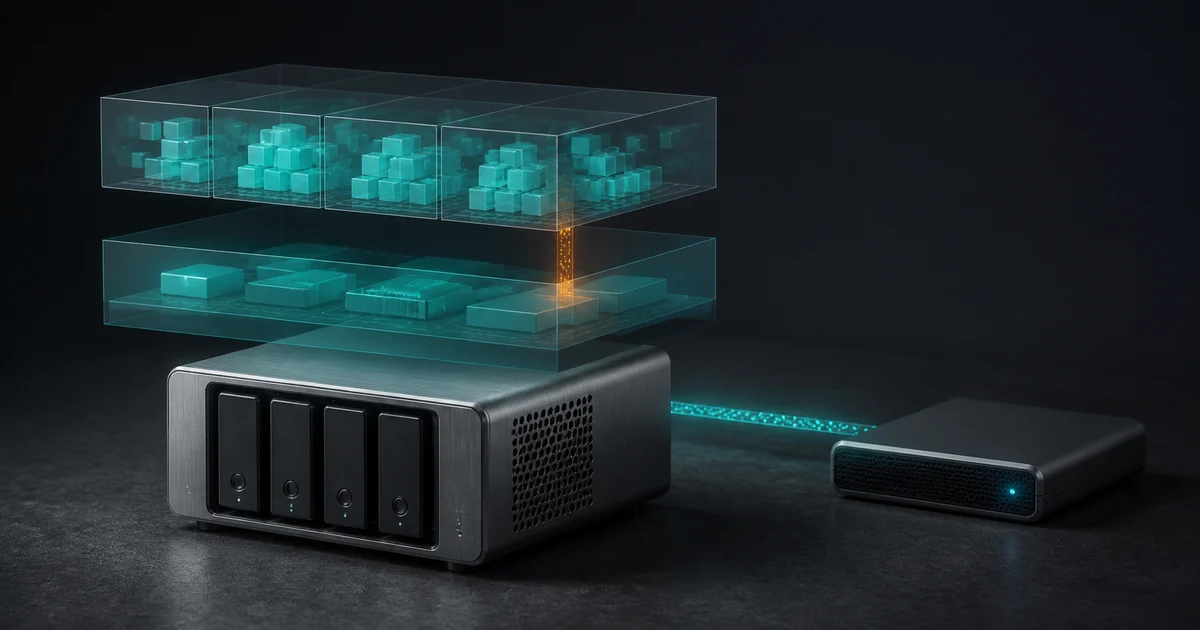
On a Wayland host, the root --service process loads the packaged libdrmtap library from a private absolute path and reads DRM/KMS scanout buffers. It sends file descriptors or CPU-converted frames over a RustDesk IPC channel to an unprivileged --server process, where display conversion and encoding continue. The IPC peer is checked against the active session identity and executable path. The documented fallback order is DRM, then PipeWire, then the existing display path where applicable.
This is a meaningful design improvement over an earlier privileged-helper proposal. It avoids a world-executable file with CAP_SYS_ADMIN and keeps the capture operation inside a root service RustDesk already installs. It does not make the new path unprivileged. Reading another client's DRM scanout still requires broad authority, and the privileged service now loads and executes a new display-capture library.
What it does—and what it does not
The preview addresses a narrow but valuable job:
- connect without approving a new Wayland portal prompt;
- reach supported login greeters after reboot;
- capture multiple active displays through DRM/KMS;
- fall back to PipeWire when the direct backend is unavailable;
- retain RustDesk's normal clients, session controls, and optional self-hosted rendezvous/relay server.
It does not create a display when no active CRTC exists. A powered-off monitor, closed laptop lid, display-manager sleep policy, or truly headless server can still leave nothing to capture. Virtual KMS, a dummy display, or another headless configuration may remain necessary.
It also does not turn RustDesk Server OSS into a fleet-management platform. The free server supplies hbbs for identity, rendezvous, and signaling plus hbbr for relay traffic. Centralized accounts, policy, device management, OIDC/LDAP, web administration, and related controls belong to the paid Pro boundary. Self-hosting the OSS server changes where rendezvous and relayed traffic run; it does not replace endpoint hardening or prove every session is encrypted as intended.
Finally, the preview does not make Wayland support universal. RustDesk's announcement limits the package to x86-64 Debian/Ubuntu systems and says Fedora and Arch support are future work. The standard client still documents Wayland as experimental and the login-screen route as unsupported because the stable documentation has not yet promoted this preview into the normal release.
The security trade is explicit
Wayland's portal prompt is inconvenient precisely because it prevents a background process from silently capturing a screen. True unattended access must move that authorization somewhere else: package installation, root-service policy, RustDesk authentication, and network access controls.
The new backend therefore changes the host threat model in four ways.
1. Root can capture before login
The root service reads the active scanout directly and can reach the greeter. That is the feature. It also means a flaw in the new DRM library, its loader, IPC authorization, frame validation, or display selection sits on a sensitive boundary. The implementation keeps graphics conversion in the unprivileged process and uses an absolute private library path, which reduces some exposure. It does not remove the need for independent review and host-specific testing.
2. Unattended credentials become a primary control
A permanent password that enables access after reboot is now more valuable to an attacker. Restrict incoming permissions to the minimum needed, disable file transfer, terminal, clipboard, camera, audio, tunneling, and remote configuration where they are not part of the support job, and set a unique high-entropy permanent credential. RustDesk Server OSS does not provide the same centralized identity and policy features as Pro, so free deployments must own configuration consistency another way.
3. Self-hosting changes the route, not the endpoint capability
RustDesk first tries direct peer-to-peer connectivity through hbbs; if hole punching fails, the session flows through hbbr. The project documents NaCl-based end-to-end encryption, but its July security clarification matters: stable 1.4.9 added a pre-login warning and defaults to disconnect when peer encryption cannot be verified, yet a user may explicitly continue without E2EE for compatibility. Policy and training should forbid that exception on managed systems.
Use a server public key on every client, expose only required ports, monitor failed authentication, and pin a versioned server image. The current RustDesk Server OSS release is 1.1.16 from July 20; it fixed an unauthenticated UDP punch-hole reflection/amplification issue. The official multi-architecture Docker tag is available, but latest is a moving target. Record the version and digest rather than deploying an unpinned tag.
4. Dependency status is not the same as exploitability
The stable 1.4.9 lockfile pins fuser 0.15.1. GitHub advisory GHSA-cvmj-47v9-35m9 marks versions before 0.16.0 affected by an uninitialized-memory read and leak in libfuse session creation. RustDesk's master moved to 0.16.0 on August 12. This establishes a version gap, not that the advisory is remotely exploitable through RustDesk. Ask upstream which package paths exercise the affected code, and verify the actual dependency inside the preview you approve.
RustDesk has a documented vulnerability-reporting email but no bug bounty. No RustDesk repository advisory was published through GitHub's advisory endpoint when checked on August 15. Absence of a project advisory is not a security audit; the maintainers' July discussion and dependency evidence remain relevant.
Maturity: fast progress, still a moving target
The project's published test matrix is encouraging but must be labeled correctly. According to the pull-request author, the DRM path was exercised on Intel Meteor Lake and Iris Xe, an AMD RX560 multi-GPU system under GNOME and KDE, NVIDIA Jetson Orin Nano, and virtio-gpu. Multi-monitor switching and login-screen capture were included in parts of that matrix. These are project-reported results, not independent OpenSourceChoice tests.
The same upstream record lists important gaps:
- two concurrent remote clients were not verified in the main implementation review;
- a closed lid with an external display was not verified;
- active-output sleep and greeter keep-awake behavior depend on the compositor;
- a mid-session resolution decrease still has an open capture-rebuild fix;
- multi-monitor pointer scaling has a current issue;
- a new retry/backoff change for failed display lookups remained open on August 15.
The chronology is more informative than the marketing sentence. The core backend merged August 6. A bug showing that login-screen capture still failed was fixed only on August 13. Display enumeration changes were still being revised on August 14. Active maintenance is a strength, but rapid correction means a build that worked yesterday is not automatically the build you should standardize tomorrow.
Repository activity is broad: commits continued through August 14, and the GitHub search API showed 78 open issues and 56 open pull requests during this review. Those counts are observations, not a quality score. The feature-specific work and follow-ups are concentrated around its primary contributor, so teams should watch whether more maintainers gain operational ownership before treating the backend as durable infrastructure.
The rolling package is a provenance problem
The preview download looks versioned, but the filename is rustdesk-unattended-wayland-1.4.9-x86_64.deb even though the feature landed after stable 1.4.9. It is attached to the rolling nightly release, whose assets are replaced daily.
During this review, the nightly asset had been refreshed on August 15 while the Git tag named nightly still resolved to an older commit. The page says it is built daily from current code, but the filename and tag alone do not identify the exact source revision contained in a downloaded package.
That is acceptable for a disposable preview and weak for fleet change control. Before every pilot install:
- download the asset once into an internal staging repository;
- record its SHA-256 digest, download time, GitHub Actions run, and expected source commit;
- retain the previous preview and stable 1.4.9 package;
- install only the recorded artifact on a named test cohort;
- block unattended automatic replacement with a new rolling asset.
Because the preview package replaces the normal package, rollback is an explicit package operation, not just disabling one preference. Prove that the stable package restores service and configuration without physical intervention.
Operational cost and data flow
The client feature has no license fee, but the real cost is not zero.
| Cost area | What the team owns |
|---|---|
| Endpoint | Package pinning, root service, credentials, permissions, logs, screen-sleep policy, and rollback |
| Compatibility | Distribution, compositor, display manager, GPU/driver, monitor topology, scale, codec, and client matrix |
| Network | Rendezvous availability, NAT behavior, firewall ports, relay bandwidth, DNS, TLS around management surfaces, and DDoS controls |
| Security | Credential rotation, E2EE verification policy, least-privilege session features, alerting, and incident response |
| Recovery | SSH, console, IPMI/KVM, cloud serial console, or a second remote path independent of RustDesk |
| Governance | AGPL review, OSS-versus-Pro feature boundary, package provenance, and documented exception ownership |
The OSS server is inexpensive to run in raw compute terms. Official documentation says a small server is sufficient and estimates relayed 1080p traffic from roughly 30 KB/s to 3 MB/s depending on resolution and activity. That range is a project estimate, not a capacity guarantee. Measure concurrent relay throughput, egress cost, CPU, memory, packet loss, and reconnect behavior on your own network.
Containers help reproduce hbbs and hbbr; they do not contain the Wayland desktop client. The preview .deb must run on the controlled Linux workstation because it needs the host's DRM/KMS and input stack. A Dockerized server cannot solve a client-side login-screen capture problem.
License, commercial use, and lock-in
The RustDesk client and Server OSS are AGPL-3.0 licensed. The same license is present in stable 1.4.9 and current master; no current license switch was found. Unmodified internal use and redistribution of modified builds have different compliance questions, and the AGPL adds network-source obligations for modified software. Teams embedding, rebranding, or offering a modified remote-access service should obtain specific legal review rather than treating “open source” as “no conditions.”
The free server has no runtime license fee. The enterprise administration layer is a commercial product. That boundary matters before adoption: if centralized accounts, SSO, 2FA enforcement, device groups, policy, or web-console workflows are mandatory, compare the current Pro terms with building and maintaining equivalent controls around Server OSS. Do not discover the governance requirement after endpoints are deployed.
Protocol and infrastructure portability are reasonable. You can self-host the OSS rendezvous/relay, preserve versioned containers and configuration, and return clients to public infrastructure or a replacement server. Client package state, RustDesk IDs, policies, address books, and Pro-only management data are product-specific. Document exports and a migration path before the fleet depends on them.
Alternatives to evaluate in parallel
| Option | Best fit | Main trade-off |
|---|---|---|
| RustDesk Wayland preview | Cross-platform remote support where login-screen access and self-hosted rendezvous/relay both matter | Privileged rolling preview for one Linux package family |
| GNOME Remote Desktop | GNOME-managed desktops where native RDP remote login is sufficient and access can stay behind a VPN or private network | Tied to GNOME's desktop and RDP model; no RustDesk-style global rendezvous workflow |
| Sunshine plus Moonlight | Low-latency desktop or game streaming with suitable GPU encoding and a controlled network | Streaming-first design, not a fleet support and login-screen management system |
| Stable RustDesk 1.4.9 plus X11 | Existing RustDesk fleets that can temporarily retain Xorg for unattended recovery | X11 is being retired in important desktop environments and weakens isolation |
| Stable RustDesk plus a virtual display | Headless lab systems where a predictable synthetic display is acceptable | Extra display configuration and another failure mode; not the physical greeter session |
GNOME's built-in Remote Login is the most important comparison for homogeneous GNOME fleets. It supports RDP login, exposes an encryption fingerprint, and avoids introducing a third-party DRM capture layer. It still needs network reachability and does not reproduce RustDesk's cross-platform ID and relay model.
Sunshine is better when high-frame-rate streaming is the real job. Its Linux support includes Wayland paths and KMS-aware packages, but its Moonlight ecosystem, hardware expectations, and operational model differ from remote support. Do not select a tool because both can move pixels; select it for the complete access, identity, recovery, and administration job.
A practical pilot plan
1. Define a narrow cohort
Start with one or two single-user machines that can be physically reached or recovered through SSH, serial console, IPMI/KVM, or a cloud console. Do not begin with executive laptops, shared workstations, kiosks, or machines holding regulated data.
2. Freeze the artifact and baseline
Record stable 1.4.9 behavior first. Capture the current configuration, package list, RustDesk ID, server key, permissions, service state, and rollback package. Then snapshot the preview artifact and digest as described above.
3. Test the real matrix
Exercise every supported combination you intend to own:
- cold boot to GDM or SDDM;
- login, logout, lock, unlock, user switch, and service restart;
- one display, mixed-scale multi-monitor, rotated display, and resolution change;
- Intel, AMD, and NVIDIA drivers actually present in the fleet;
- monitor sleep, powered-off monitor, closed lid, and headless state;
- direct P2P, forced relay, packet loss, high latency, and relay restart;
- Windows, macOS, Linux, Android, or web clients that operators really use;
- clipboard, file transfer, audio, terminal, and input permissions in both allowed and denied states.
4. Attack the control boundary
Attempt wrong passwords, expired credentials, repeated login failures, an unverified-E2EE session, unauthorized local users, stale clients, and a missing server key. Confirm that logs identify the controlled host, controller, route, encryption state, and denied action without recording sensitive screen or clipboard content.
5. Measure adoption criteria
Track successful unattended connections from cold boot, time to first frame, input correctness, display-selection accuracy, reconnect success, p95 session latency, CPU/GPU use, relay bandwidth, failure recovery time, and rollback time. Require zero sessions that proceed after an E2EE verification failure and zero unexplained permission changes.
6. Repeat across daily builds
One passing nightly is not stability. Re-run the suite on at least three explicitly pinned builds over an agreed observation window. Reject the rollout if a new asset changes behavior without a traceable source revision, if physical recovery is required, or if the rollback cannot meet the support objective.
Production acceptance criteria
Promote only when all of these are true:
- the exact package and source revision are traceable and retained;
- every fleet GPU, compositor, display manager, and monitor topology has a passing result;
- cold-boot login-screen access works without weakening local authentication;
- display sleep, resolution changes, and network interruption recover automatically;
- RustDesk permissions are centrally enforced or independently audited;
- unverified E2EE cannot be accepted on managed endpoints;
- relay capacity and failure behavior meet measured objectives;
- a second recovery channel remains available;
- stable-package rollback is rehearsed and fits the recovery-time target;
- security owners accept the root DRM capture boundary and AGPL obligations.
Reject or defer when the environment is multi-user, the preview architecture is unsupported, automatic nightly replacement cannot be disabled, no out-of-band recovery exists, or central policy requires paid features that have not been approved.
OpenSourceChoice conclusion
RustDesk's Wayland preview solves a genuine problem rather than adding a cosmetic feature. Direct DRM/KMS capture can restore unattended remote administration as Linux desktops move away from X11, and the project has taken meaningful steps to isolate graphics work, authenticate IPC, package the feature separately, and preserve fallback behavior.
The same evidence makes a broad deployment premature. The feature bypasses an intentional Wayland consent boundary, expands a root service, lives behind a daily-replaced package whose filename still says 1.4.9, supports only one distribution and architecture family, and received critical login-screen fixes immediately before announcement. Project-reported hardware coverage is promising, not sufficient for your fleet.
Use the preview as a measured infrastructure experiment. Freeze the artifact, minimize permissions, self-host only when you can operate the relay safely, test every display and failure state, and keep another route into the machine. RustDesk has crossed the “possible on Wayland” threshold. It has not yet crossed the “safe to standardize unattended access” threshold.
Official sources and further reading
- Unattended Remote Access on Wayland with RustDesk — RustDesk Team; announcement published August 14, 2026; preview scope, supported package family, login-screen claim, multi-monitor claim, and rollout plan.
- DRM/KMS Wayland implementation PR #15420 — RustDesk repository; merged August 6, 2026; privileged architecture, package boundary, fallback, project test matrix, known limitations, and review history.
- Login-screen follow-up PR #15792 — RustDesk repository; merged August 13, 2026; root-service handoff required for greeter capture.
- Display-lookup backoff PR #15865 — RustDesk repository; open during the August 15 review; ongoing failure/retry behavior after preview integration.
- Mid-session resolution issue #15695 and multi-monitor pointer issue #15731 — upstream compatibility reports; open during this review.
- RustDesk 1.4.9 release — current stable client; released July 6, 2026; platform packages and security-related fixes.
- RustDesk rolling nightly release — current preview delivery channel; daily-replaced assets, including the unattended Wayland
.deb; accessed August 15, 2026. - Current RustDesk commits — active upstream work observed through August 14, 2026.
- RustDesk Linux documentation — current stable installation formats, Wayland status, login-screen limitations, and distribution guidance; accessed August 15, 2026.
- RustDesk documentation overview — supported clients, NaCl-based E2EE claim, and official repositories; accessed August 15, 2026.
- RustDesk self-host architecture and Docker deployment guide —
hbbs/hbbr, direct-versus-relay flow, ports, containers, persistence, and deployment responsibilities. - RustDesk Server OSS 1.1.16 — released July 20, 2026; fixes include unauthenticated UDP reflection/amplification abuse.
- Official RustDesk Server container tags — versioned multi-architecture images and moving
latesttag; accessed August 15, 2026. - RustDesk security policy — private vulnerability reporting and no-bounty statement; accessed August 15, 2026.
- RustDesk security clarification — maintainer account of the relay encryption-downgrade and file-transfer scope fixes included in 1.4.9; updated July 7, 2026.
fuseradvisory GHSA-cvmj-47v9-35m9 and RustDesk's 0.16.0 update — dependency affected range and current-master remediation; RustDesk exploitability not established by this analysis.- RustDesk AGPL-3.0 license — current client redistribution and network-source terms; unchanged between stable 1.4.9 and current
masterin this review. - GNOME Remote Login — official RDP remote-login configuration, clients, authentication, and encryption-fingerprint verification.
- Sunshine repository — GPL-3.0 self-hosted streaming alternative with current Linux/Wayland support and different operational goals.
- Hacker News discussion — current interest signal observed August 15, 2026; not used as primary technical evidence.
r/linuxdiscussion — independent discussion of preview scope, distro limits, and stable-versus-experimental expectations; posted August 14, 2026.- GitHub daily Trending — discovery signal observed August 15, 2026; displayed 143 stars gained that day, not treated as proof of quality.
- RustDesk Wayland demo on X — first-party demonstration linked from the announcement; used only as a release signal, not independent validation.
Build a stack for this use case.
Answer nine practical questions and compare three transparent architectures with costs, free limits, lock-in, and migration paths.
Build my stack