Preserve the OpenRadioss version you already trust, then pilot OpenCourant against validated reference models. Do not substitute the new fork into safety-critical or qualification-bound work merely because it builds. OpenCourant has recovered the code, automated packages, Arm support, and containers with impressive speed. It has not yet recreated the original maintenance organization, every proprietary build dependency, or a current security-response process.
That is the practical answer for engineers asking what to do after Siemens retired the public OpenRadioss project on October 1. The license keeps existing code usable; it does not preserve a validated toolchain for you.
This analysis uses public project state checked on October 6, 2026. OpenSourceChoice did not run the solver, compare numerical results, or validate a crash model.
Executive verdict
| Question | Assessment |
|---|---|
| Best fit now | Research teams and experienced solver operators able to own builds, numerical validation, security review, and rollback |
| Poor fit now | Safety-critical production, regulated sign-off, or teams expecting vendor support and drop-in equivalence |
| Current release | latest-20261006, with Linux x86-64, Linux arm64, and Windows x86-64 packages |
| Main risk | Numerical and operational continuity: recovered code is not proof that your models, readers, MPI path, or controls behave identically |
| Real cost | HPC time, reference decks, result comparison, artifact preservation, release pinning, incident response, and solver expertise |
| Alternative to evaluate | Simcenter Radioss when supported continuity matters; CalculiX only as a separately requalified open-source solver, not a drop-in replacement |
| Adoption gate | Representative decks meet written tolerances, cold installation is reproducible, unsupported features are absent, and rollback works within the required time |
Why this matters now
Siemens says it is consolidating future investment in commercial Simcenter Radioss and a managed shared-source R&D program. The OpenRadioss website was retired, and the public repository disappeared rather than becoming a read-only archive.
Interest is not confined to one announcement. The shutdown drew more than 1,000 votes in the checked r/linux discussion, appeared on Hacker News, and received independent coverage from Phoronix, Golem, and It's FOSS. A separate Reddit thread about OpenCourant drew more than 100 votes. These are attention signals, not technical proof, but they show a real migration question rather than a manufactured release story.
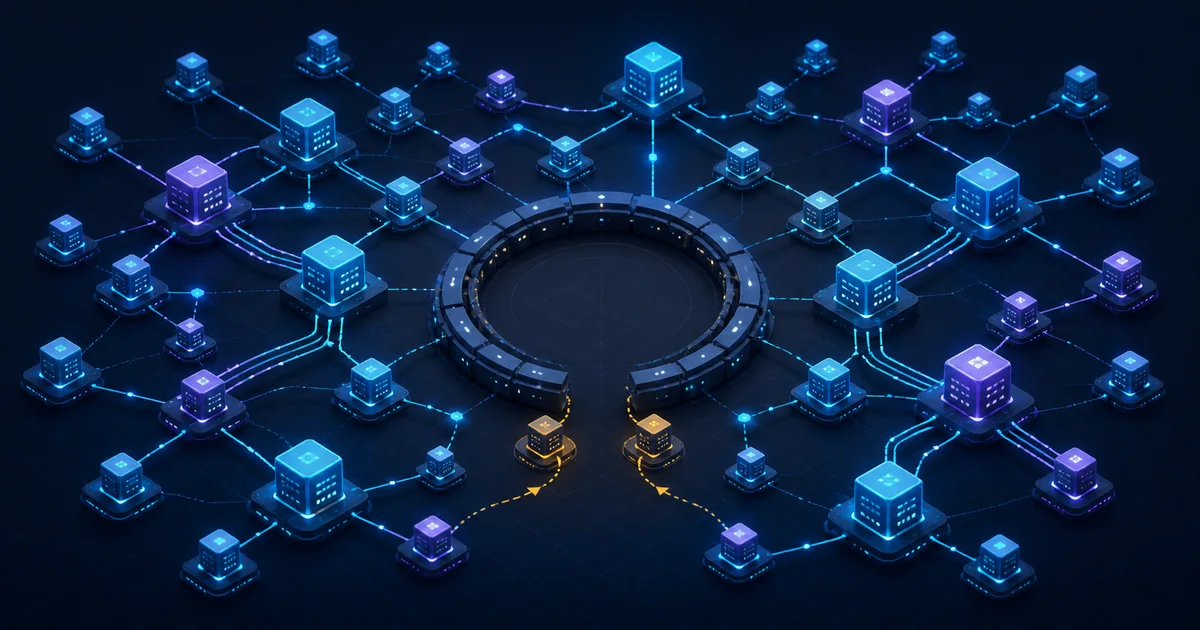
The community response was fast. OpenCourant was created as an AGPL-licensed continuation. Its repository preserves 5,000-plus historical commits, and the project rebuilt delivery infrastructure that had depended on private registries, runners, binaries, and source repositories. Three dated releases appeared between October 3 and October 6.
What OpenCourant does—and does not—restore
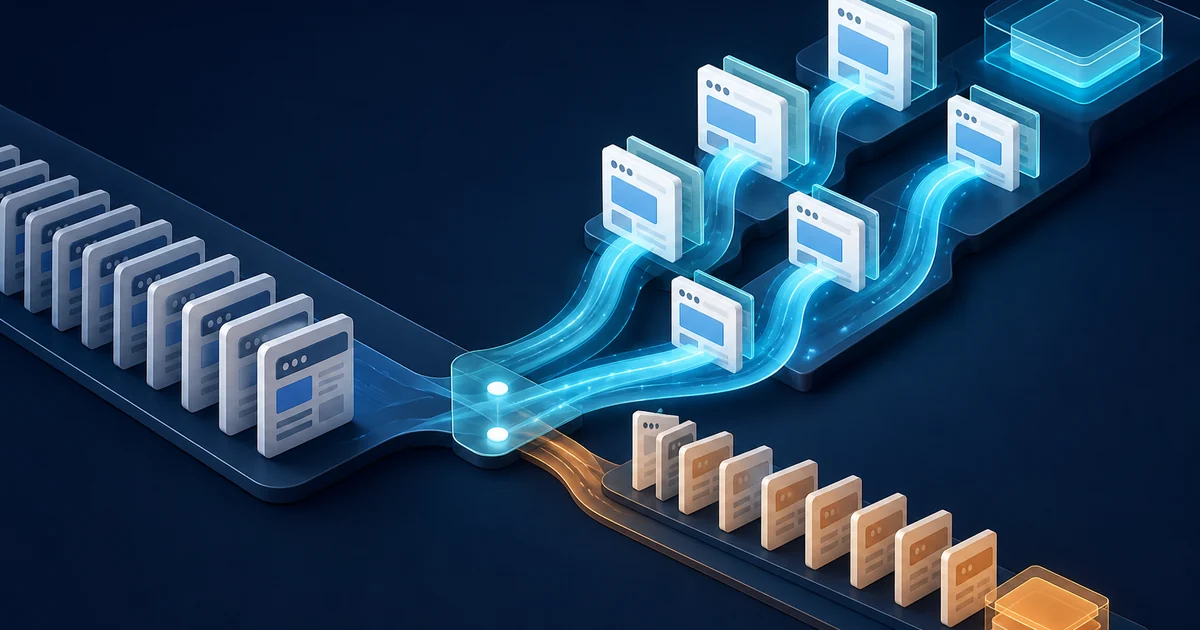
The October 6 release publishes Starter and Engine builds for Linux x86-64, Linux arm64, and Windows x86-64. Linux includes SMP and OpenMPI variants; Windows is SMP-only. The Arm pipeline reports its MiniQA suite passing 81 of 81 tests, and the release is tied to a specific commit and GitHub Actions run.
The project also merged multi-architecture runtime images at ghcr.io/opencourant/opencourant. The delivery flow builds containers from the matching release packages and smoke-tests SMP and MPI execution. That is useful reproducibility evidence, but it remains project-reported CI evidence rather than an independent qualification of engineering results.
Important gaps remain explicit:
/ALE/STRUCTURED_MESHis rejected because recovered input readers do not support it.- Windows has no MPI Engine in the current package.
- The recovered reader stack still contains proprietary binary components while an open reader is incomplete.
- The downloads flow keeps only three recent dated tags, so operators must preserve the exact source, package, checksum, and container digest they approve.
- Project governance is still being assembled. The website actively asks former maintainers to return.
This is why the maintenance-exit lesson from IPFS applies here: an open license preserves an exit path, not the people, credentials, infrastructure, or validation history behind it.
Security, privacy, and license boundaries
OpenCourant's checked SECURITY.md still names OpenRadioss and sends private reports to webmaster@openradioss.org. Its contribution guide still links to the deleted OpenRadioss organization and refers to an old CLA process. Those stale instructions are concrete evidence that governance and vulnerability intake are not yet fully transferred. Until the project publishes and demonstrates a working security contact, treat untrusted input decks and third-party runtime libraries as a boundary your team must own.
Keep simulation models and results on controlled compute. A local package or pinned container does not inherently require uploading design data, while Siemens' shared-source program includes a private HPC environment and therefore creates a different data-processing boundary that must be reviewed contractually. Also inventory registry pulls, CI logs, crash dumps, and support uploads; a local solver can still leak sensitive filenames or model data through surrounding operations.
The solver remains under GNU AGPL v3. The license states that granted rights are irrevocable while its conditions are met, so removing the upstream repository does not cancel compliant rights to copies already released. Distribution and network use of modified versions can create source-offer obligations. Obtain legal review for modified or redistributed builds. The shutdown is also a reminder that open-source business and governance risk survives even when code rights are durable.
The real migration cost
OpenCourant has no license fee. Migration is not free.
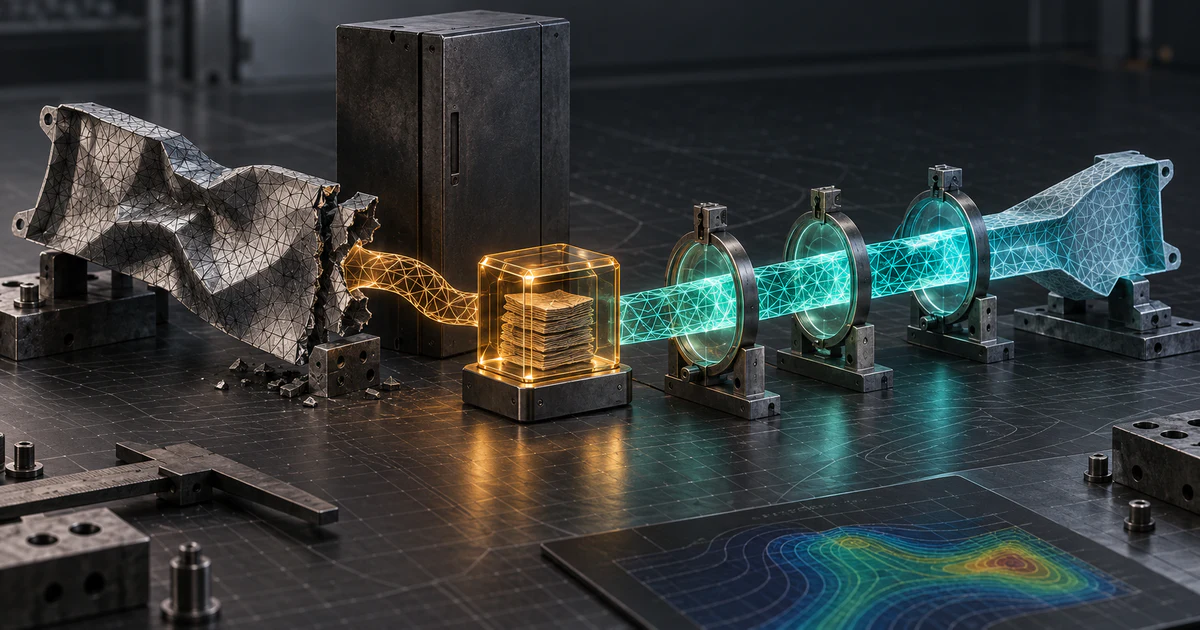
The expensive work is proving that the new artifact is acceptable for your specific models. Preserve compilers, external libraries, MPI version, environment variables, reader binaries, control cards, material models, reference outputs, tolerances, and hardware. A visually similar deformation is not a sufficient comparison. Domain owners must define acceptable differences for energy balance, contact behavior, time histories, mass, termination status, and performance.
For production teams, the supported alternative is Simcenter Radioss, with commercial pricing and terms obtained from Siemens. That may be justified when support, qualification evidence, or feature continuity matters more than source access. CalculiX is open source and worth evaluating for some structural work, but changing solvers changes formats, capabilities, and numerical behavior; it requires a new qualification program rather than a migration toggle.
A measurable OpenCourant pilot
- Freeze the baseline. Archive the exact working OpenRadioss source, binaries, checksums, external libraries, container images, build logs, and ten representative decks. Prove the archive restores on a clean host.
- Pin the candidate. Use
latest-20261006plus its commit and package checksum, or pin the container digest. Do not approve a floatinglatesttag. - Exercise the real path. Include SMP and MPI workloads, the largest model you can safely replay, every input-reader feature you depend on, and an explicit check for
/ALE/STRUCTURED_MESH. - Compare results. Have a domain owner set tolerances before execution, then compare termination, warnings, energy balance, selected time histories, wall time, peak memory, and scaling. Record project claims separately from your evidence.
- Test operations. Rebuild or reinstall cold, verify package hashes, scan the container and dependencies, restrict model access, and confirm logs contain no sensitive design data.
- Prove rollback. Restore the approved OpenRadioss environment and rerun one reference deck within the recovery objective.
Adopt the fork for broader work only when every representative deck passes, unsupported features are irrelevant, the exact artifact can be reproduced, and a current security-reporting route exists. Otherwise keep OpenCourant in research while preserving the known solver or buying supported continuity.
Final recommendation
OpenCourant is already more than a source-code mirror: it has active commits, gated packages, Arm builds, and new runtime containers. That makes it a credible preservation and pilot target only days after the shutdown.
It is not yet evidence-equivalent to the environment it replaces. The prudent move is to preserve first, validate second, and change production last. The deciding question is not whether OpenCourant can run a model; it is whether your team can reproduce, explain, and reverse the results under the same engineering controls required of the old solver.
Sources and verification notes
Primary sources:
- Siemens: The future of Radioss is Simcenter — retirement, commercial path, and shared-source R&D program.
- OpenCourant project site — continuation scope, governance status, and current project claims.
- The first OpenCourant builds are here — recovered pipeline, missing dependencies, reader limits, and governance request.
- OpenCourant
latest-20261006release — dated packages, commit, platform coverage, MiniQA claim, and limitations. - OpenCourant downloads — installation, checksums, package retention, and build-from-source path.
- Runtime container pull request — container publication design and SMP/MPI smoke-test claim.
- OpenCourant container package — public image tags and digests.
- Arm CI run — successful six-build matrix and QA job.
- Preservation audit issue — surviving history, reader gaps, and missing ecosystem artifacts.
- OpenCourant security policy — current vulnerability-reporting instructions checked October 6.
- OpenCourant contribution guide — current contribution links and CLA language checked October 6.
- OpenCourant license — GNU AGPL v3 terms.
Interest and independent context:
- Hacker News: OpenRadioss is not open anymore — migration and preservation discussion; used only as an attention signal.
- r/linux shutdown discussion — community response; used only as an attention signal.
- r/linux OpenCourant discussion — separate continuation interest signal.
- Phoronix shutdown report — independent dated reporting.
Release state, repository activity, documentation, discussion counts, and package availability are observations from October 6, 2026 and should be rechecked before a production decision.
Build a stack for this use case.
Answer nine practical questions and compare three transparent architectures with costs, free limits, lock-in, and migration paths.
Build my stack