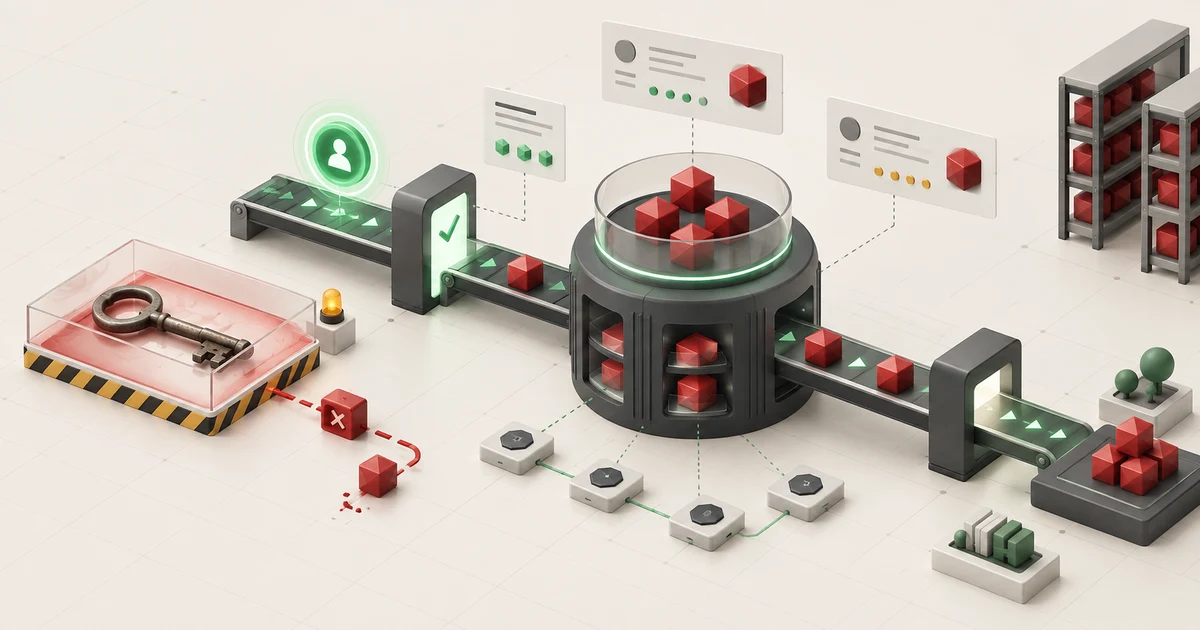

Invidious operators who allow user accounts should upgrade to v2.20260723.0 promptly. The release closes an authorization flaw that let one authenticated user remove videos from another user's playlist, and it repairs YouTube backend changes that had broken playback and metadata. This is an integrity issue, not an unauthenticated server takeover, but public multi-user instances have a real exposure.
The release is also a useful reminder of Invidious's operating contract. It can provide a lighter, self-hostable interface to YouTube, but it remains coupled to an upstream platform that changes without notice. Running it well now means operating Invidious, PostgreSQL, Invidious Companion, a reverse proxy, backups, abuse controls, and an update process—not merely starting one container.
This is a researched technical analysis as of August 3, 2026. OpenSourceChoice reviewed the current stable release, vulnerability record and patch, official installation and configuration documentation, container registry, license, repository activity, issue and pull-request state, and independent interest signals. We did not operate or penetration-test an Invidious instance, so maintainer guidance and editorial recommendations are identified rather than presented as hands-on findings.
Executive verdict
- Upgrade now if the instance is public, permits registration, or has multiple users or API tokens.
- Schedule the same release soon for a private single-user instance; the exploit precondition is narrower, but the release also fixes playback and metadata breakage.
- Back up PostgreSQL and pin the tested image, rather than pulling an unrecorded moving build directly into production.
- Disable registrations and abusable API endpoints when they are not required, then test every dependent client before deployment.
- Keep Piped and FreeTube in the evaluation set. They change the architecture, but they provide useful comparison points for server-side and per-device privacy.
- Do not mistake Invidious for independent video hosting. PeerTube solves that different problem.
Why this matters now
The timing is based on more than a project briefly appearing on a trend list.
The Invidious maintainers released v2.20260723.0 on July 23, 2026. It is the latest non-prerelease version observed on August 3. The release includes the cross-user playlist fix, a switch that can disable easily abused API endpoints, an updated YouTube request identity, and repairs for backend changes that affected playback and metadata.
The underlying vulnerability was fixed in commit 77ad416 on June 30 and entered the July 23 release. The CVE record was published on June 30 and updated on July 14, so the vulnerability disclosure is not a new August event. What is current is that operators now have a stable tagged release containing the fix.
Interest is also sustained rather than purely promotional. Invidious appeared on GitHub's daily Trending list when checked on August 3, while July self-hosting discussions continued to report practical concerns such as performance and upstream breakage. The repository was receiving maintainer commits and active pull-request updates on August 3. These are discovery and maintenance signals, not proof that the software is secure or suitable for every deployment.
OpenSourceChoice already covers Invidious in its broader open-source YouTube alternatives guide. This article has a different intent and conclusion: it evaluates the post-July 23 security and operations decision for existing or prospective instance owners.
What the release changes
| Change | Verified release state | Operational meaning |
|---|---|---|
| Cross-user playlist deletion fix | Included in v2.20260723.0 | Multi-user operators should move off affected releases through v2.20260626.0 |
| YouTube backend compatibility repairs | Included for playback and metadata failures | The update is useful even where user accounts are disabled |
disable_abusable_api option | Added for instance owners | Public operators can remove high-abuse video, clip, and transcript API surfaces when clients do not need them |
| Runtime and image refresh | Docker uses Crystal 1.20.3; the OCI image uses OpenSSL 3.6.3 | Rebuilds and images changed alongside application code, so staging should cover startup and media retrieval |
The previous v2.20260626.0 release had already added a privacy option to submit searches with POST, keeping query text out of URLs, browser history, and ordinary URL logs. It also repaired an authentication failure that could expose private playlist RSS data. Operators skipping several versions need to review both releases rather than treating July 23 as a one-line security patch.
The vulnerability, without alarmism
CVE-2026-58447 is a broken object-level authorization flaw. An authenticated attacker could supply the global index of a video in another user's playlist to the removal endpoint. Public playlist JSON could expose those index values, while the vulnerable deletion path did not verify that the target item belonged to the attacker's playlist.
The practical impact is unauthorized removal of playlist entries:
- the attacker needs an authenticated account or token;
- confidentiality is not the reported impact;
- the flaw does not provide remote code execution or server administration;
- the integrity impact is meaningful because another user's saved collection can be changed permanently;
- public instances with open registration have the broadest attacker pool.
The fix passes the playlist ID into the database deletion operation so removal is constrained to the intended playlist. The CVE record identifies versions through v2.20260626.0 as affected and commit 77ad416 as fixed. The stable July 23 release contains that patch.
A private instance with one trusted account has much lower exploitability, but "lower" is not "zero." Old tokens, forgotten accounts, shared credentials, and later registration changes can reintroduce the prerequisite. The playback fixes provide a separate reason to remain on the stable release.
Architecture and data flow
The current production path has more moving parts than the name "frontend" suggests:
browser
  -> TLS reverse proxy
      -> Invidious application
          -> PostgreSQL for accounts, playlists and subscriptions
          -> Invidious Companion
              -> YouTube data and video servers

optional advanced path:
browser -> reverse proxy -> Invidious Companion for video streams
Invidious renders the web interface, account features, feeds, and API. PostgreSQL holds persistent user and application data. Invidious Companion retrieves video streams from YouTube and handles the current attestation-dependent playback path. A public companion URL can remove an extra proxy hop, but it adds a separate externally routed surface that must share the intended authentication key and proxy policy.
This architecture changes the privacy boundary; it does not remove every observer. A self-hosted instance can keep subscriptions, playlists, and account data under the operator's control. The operator can still observe requests and logs, and YouTube can observe traffic leaving the instance or companion. When users connect to somebody else's public instance, they are trusting that operator in addition to the upstream platform.
What Invidious does not solve
- It does not host an independent copy of the videos or creator community.
- It does not prevent YouTube from changing internal endpoints, player behavior, or access controls.
- It does not guarantee that a datacenter IP will continue to receive video responses.
- It does not make a public instance free to operate; media proxying is bandwidth-intensive.
- It does not replace account, backup, monitoring, legal-notice, or abuse-response procedures.
- It does not prove that every third-party public instance runs the current release or follows the same logging policy.
The official instance list is currently short because of recent YouTube issues, and the maintainers recommend home hosting where possible. That is an unusually direct maturity signal: the software remains active, but public operation is exposed to upstream breakage and resource pressure that an ordinary static web app does not face.
Real operating cost
The application has no license fee. The meaningful costs are infrastructure and operator attention.
The official installation guide reports minimum guidance of 20 GB of disk and 2 GB of free RAM for Invidious plus Companion, with regular restarts. For a public instance, the maintainers recommend at least 60 GB of disk, 4 GB of RAM, two virtual CPUs, a 200 Mbps link, and roughly 20 TB of traffic or an uncapped connection. These are project recommendations, not an independent capacity benchmark.
Operators should budget for:
- PostgreSQL storage, backup retention, and restore tests;
- reverse-proxy TLS, rate limiting, and log retention;
- high and sometimes unpredictable video egress;
- IP blocking or throttling by the upstream platform;
- frequent compatibility updates and scheduled restarts;
- monitoring for playback, metadata, feeds, Companion, and database health;
- abuse complaints and possible takedown notices for a public service.
Home use can be inexpensive when bandwidth and hardware already exist. A reliable public instance can be costly even when the software is free, because traffic and incident handling dominate the bill.
Security and privacy baseline
Before exposing the July release, an operator should establish these controls:
- Pin the application image. Use the official Quay registry, record the tested release-associated tag and manifest digest, and promote that exact image. The official guide uses
latestfor convenience; a production rollback needs something immutable. - Back up PostgreSQL. Test that accounts, subscriptions, and playlists can be restored before changing the image.
- Use distinct random secrets. Replace the example
hmac_keyand generate a separate 16-character Companion key. Keep both out of version control. - Terminate HTTPS correctly. Set
domain,https_only, andexternal_portfor the real reverse-proxy topology. - Reduce account exposure. Disable registration if the instance serves a known group, remove unused accounts and tokens, and avoid sharing administrator credentials.
- Disable unused high-abuse APIs. Set
disable_abusable_api: trueonly after confirming that desktop, mobile, or automation clients do not require video, clip, or transcript endpoints. - Constrain containers. Retain the documented read-only filesystem, dropped capabilities, no-new-privileges setting, health checks, and bounded logs where applicable.
- Review data in logs. Prefer POST search, avoid logging sensitive query bodies, restrict log access, and set retention deliberately.
- Keep the service behind a maintained reverse proxy. Add rate limits and request-size boundaries appropriate to real clients.
- Subscribe to releases and CVE feeds. Upstream compatibility can break between security-release cycles.
The repository's public community profile did not expose a SECURITY.md when checked on August 3, and the repository security page did not show a project-specific reporting policy. That is a disclosure-process gap, not evidence that the current release has an undisclosed vulnerability. Organizations with formal vendor-risk requirements should include a documented private reporting channel in their adoption criteria.
License and commercial implications
Invidious and Invidious Companion use the GNU Affero General Public License v3. Companies may run, study, modify, and offer the software as a service. The important network clause is that users interacting remotely with a modified version must be offered the corresponding source for that version.
An organization can therefore operate a commercial or internal instance, but it should track modifications, preserve notices, and provide the required source offer when the AGPL network condition applies. Infrastructure configuration, trademarks, content rights, and YouTube's terms are separate questions; an open-source application license does not grant rights to third-party videos or remove platform-policy risk.
The exit path is technically reasonable. The code and database are under the operator's control, and Invidious supports account-data import and export. Migration still has friction because playlist, subscription, history, token, and preference formats do not necessarily map one-to-one into Piped, FreeTube, or another service. Keep periodic exports and test the target rather than treating theoretical portability as a completed migration plan.
Maturity and maintainer risk
Invidious is active and not archived. The current release was followed by new commits and pull requests through August 3, including work on comments, channel rendering, SOCKS5 proxying, Companion behavior, and buffer configuration. Several maintainers and contributors appeared in the recent queue.
The release cadence is uneven: the five most recent stable tags observed were July 23, June 27, February 7, September 13, and May 17. That is compatible with a community project responding to upstream changes, but it is not a predictable monthly maintenance window.
The repository also has a large issue and pull-request backlog. Counts are dynamic and are not a quality score. More important is the operational pattern: a relatively small maintainer group must continually adapt to an upstream service it does not control. This is not a responsible basis for a numerical bus-factor claim, but it is a real continuity risk for public operators.
Who should use it
Good fit
- a household or small trusted group that wants a web interface and shared subscriptions under its own administration;
- a privacy-conscious team that accepts the YouTube dependency and can operate containers, PostgreSQL, TLS, backups, and monitoring;
- developers that need a documented alternative API and can tolerate compatibility changes;
- an existing instance owner prepared to patch quickly and limit registration or API abuse.
Poor fit
- anyone seeking independent video publishing, creator migration, or federation;
- a public-service operator without abundant bandwidth, abuse handling, and an update rota;
- a regulated team that requires a formal upstream security SLA and disclosure process;
- users who want a zero-maintenance replacement for the official YouTube interface;
- deployments that cannot tolerate upstream IP blocking or sudden parser changes.
Alternatives to evaluate in parallel
| Alternative | Better fit | Main trade-off |
|---|---|---|
| Piped | A self-hosted web frontend with a separately designed backend and proxy stack | It retains the same YouTube and IP-blocking dependency and has more deployment components to compare |
| FreeTube | A single person's desktop use with subscriptions, playlists, and history stored locally | It is not a shared web instance; YouTube can still observe direct video requests without a VPN or proxy |
| PeerTube | Independent, federated video publishing and community ownership | It requires storage, transcoding, moderation, and audience-building rather than reusing YouTube's catalog |
| Official YouTube in a hardened browser profile | Maximum compatibility with minimal self-hosting work | It does not provide an open-source service or the same control over account and interface data |
Piped is the closest server-side comparison. FreeTube is the more useful privacy comparison for one user because its local data model removes the public-instance operator from the trust chain. PeerTube should be evaluated only when the actual requirement is independent hosting rather than an alternative view of YouTube.
A controlled upgrade plan
1. Inventory the current instance
Record the running version, container digest, database version, enabled registration and API settings, Companion topology, proxy routes, clients, and external monitoring. Do not assume a latest label proves the running container was recreated.
2. Make a restorable backup
Back up PostgreSQL and configuration, then restore them on an isolated host. Preserve the current application image and secrets for rollback. A backup that has never been restored is not an upgrade gate.
3. Stage the July release
Deploy the release-associated image to a non-public hostname with copied, sanitized data. Confirm that Invidious and Companion start, migrations complete, health checks pass, and the reported version is v2.20260723.0.
4. Exercise the security boundary
Create two disposable users and two playlists. Confirm that one user cannot remove an item from the other user's public playlist. Do not test this destructively on real user data. Verify token scopes and delete the test accounts after the check.
5. Test real media paths
Use representative on-demand videos, live streams, captions, channel pages, feeds, search, playlists, and every supported client. Test with and without the public Companion path if that topology is under consideration.
6. Apply least privilege
Disable registration if it is unnecessary. Enable disable_abusable_api when client tests prove the affected endpoints are not needed. Confirm secrets, TLS settings, proxy headers, container restrictions, and log retention.
7. Promote and observe
Deploy the exact tested image, retain the prior image and database backup, and watch application, Companion, proxy, and PostgreSQL health. Compare playback failures and latency with the pre-upgrade baseline rather than using an arbitrary universal threshold.
Adopt the release only when these gates pass:
- the running version and pinned image match the staged artifact;
- the cross-user playlist regression test fails safely;
- all required clients work with the chosen API restrictions;
- representative playback, metadata, captions, feeds, and search succeed;
- PostgreSQL restore completes within the operator's recovery target;
- rollback preserves accounts, subscriptions, and playlists;
- no unexplained outbound route or sensitive log field is introduced.
OpenSourceChoice assessment
- Best for: technically capable home users and small groups that want a shared, self-hosted YouTube interface.
- Not for: independent video publishing, zero-maintenance use, or unsupported public operation without bandwidth and abuse controls.
- Why now: the July 23 stable release contains the June 30 authorization fix and current YouTube compatibility repairs, while independent interest and upstream activity remain visible.
- Real cost: database and proxy operations, large media egress, compatibility updates, monitoring, backups, and incident handling.
- Main risk: the service remains operationally coupled to an upstream platform that can change or block it without coordination.
- Production gate: prove the playlist isolation fix, client compatibility, pinned-image rollback, and a real PostgreSQL restore.
- Parallel alternative: Piped for another self-hosted architecture; FreeTube when the use case is one private desktop user.
- Recommendation: upgrade account-enabled instances to
v2.20260723.0, harden the exposed surface, and keep a tested exit path; do not launch a new public instance unless someone owns bandwidth, abuse, and emergency updates.
Sources
Primary sources were accessed on August 3, 2026 unless another date is stated.
- Invidious v2.20260723.0 release notes — Invidious maintainers; released July 23, 2026; current stable release, security fix, API control, compatibility repairs, and runtime changes.
- CVE-2026-58447 record — National Vulnerability Database and VulnCheck; published June 30 and modified July 14, 2026; affected versions, prerequisites, impact, and fix reference.
- Cross-user playlist deletion patch — Invidious maintainers; committed June 30, 2026; ownership-bound deletion change.
- Security fix pull request #5790 — Invidious maintainers; fix review and link to the original report.
- Invidious v2.20260626.0 release notes — Invidious maintainers; released June 27, 2026; POST search privacy, private RSS authentication, and packaging changes.
- Official installation guide — Invidious documentation; current architecture, production Docker setup, hardware and traffic guidance, Companion, updates, and restart recommendations.
- Configuration reference at v2.20260723.0 — Invidious maintainers; release configuration for API restriction, registration, TLS, secrets, logging, and Companion.
- Official Quay image tags — Invidious container registry; release-associated tags and manifests observed August 3, 2026.
- Invidious repository — Invidious maintainers; current activity, issue and pull-request state, installation links, and project status.
- Repository security page — GitHub repository surface; no project-specific
SECURITY.mdvisible when accessed August 3, 2026. - AGPLv3 license at v2.20260723.0 — Invidious contributors; current license and network-source obligation.
- Invidious Companion repository — Invidious maintainers; stream-retrieval component, documentation, and AGPLv3 license.
- Public instance guidance — Invidious documentation; current instance-list state and home-hosting recommendation.
- Authenticated API documentation — Invidious documentation; account and token authentication model and playlist scopes.
- Piped repository and self-hosting guide — TeamPiped; active alternative architecture and current deployment requirements.
- FreeTube repository — FreeTube maintainers; active desktop alternative, local data boundary, and direct-request privacy limits.
- PeerTube repository — Framasoft and PeerTube contributors; active independent publishing and federation alternative.
Trend and community context:
- GitHub Trending — observed August 3, 2026; discovery signal, not technical evidence.
- Current self-hosted YouTube frontend discussion —
r/selfhosted; July 8, 2026; independent performance and adoption context.
All technical conclusions above are OpenSourceChoice editorial analysis derived from the cited upstream release, code, documentation, registry, and vulnerability record. They are not claims of hands-on operation or an independent security audit.
Build a stack for this use case.
Answer nine practical questions and compare three transparent architectures with costs, free limits, lock-in, and migration paths.
Build my stack