DuckDB 2.0 is not a routine embedded-database update. The preview introduces a new default storage format, a new SQL parser, a broader stable C extension API, asynchronous I/O and the graduation of Quack, DuckDB's HTTP-based client-server protocol. Those changes can simplify analytics stacks that currently combine local DuckDB files, object storage and a separate query service.
They also widen the operational and security boundary. Version 2.0 is still an early development build, its fall 2026 release date is tentative, Quack exposes the full SQL surface visible to the serving session, and the preview package matrix is incomplete. The new features justify compatibility work now, not a production cutover now.
OpenSourceChoice verdict: build a DuckDB 2.0 migration lab with copied data and pinned preview artifacts. Test the new parser, storage format, extensions, clients and Quack under failure. Keep production on DuckDB 1.5.5, or the supported 1.4 LTS line where stability matters more than new features, until 2.0 is stable and your complete workload passes.
This is a researched technical analysis, not a hands-on benchmark. OpenSourceChoice reviewed the August 17 preview, current documentation, release calendar, repository and security policy, client and storage compatibility guidance, Quack's security model, current project activity and independent community discussions. We did not run a production migration, reproduce maintainer benchmarks or operate Quack under load.
Executive verdict
| Question | OpenSourceChoice assessment |
|---|---|
| Who should evaluate it now | Teams embedding DuckDB in analytics products, reading remote Parquet or lakehouse data, maintaining extensions, or considering a small DuckDB query service |
| Who should wait | Production systems that need a stable package matrix, strict multi-tenant authorization, mature server operations or zero-downtime rollback |
| Current stable release | DuckDB 1.5.5, released July 22, 2026; 1.4 remains the current LTS family |
| Preview status | DuckDB 2.0 is an early development line with nightly CLI, C/C++ and Python builds; stable 2.0 is tentatively planned for fall 2026 |
| What changes the decision | Quack graduating to stable, a new storage format and parser, async object-store I/O, triggers, fuller VARIANT execution and a stable extension ABI |
| What it does not become | A distributed database, a safe untrusted-SQL sandbox, or an automatic replacement for PostgreSQL and ClickHouse |
| Main risk | Treating a major-version preview and a newly stabilized server path as a drop-in production upgrade |
| Real adoption cost | Query and file compatibility tests, client and extension certification, auth and TLS design, observability, backup, capacity tests and rollback rehearsal |
| Parallel alternative | Compare Quack with PostgreSQL or ClickHouse for the server role while retaining embedded DuckDB for local analytics |
| Production gate | Stable 2.0 packages for every required client, zero critical regressions, proven file rollback, least-privilege remote access and tested recovery |
Why this matters now
DuckDB's maintainers published the 2.0 preview on August 17, 2026. They describe more than 10,000 commits since 1.5 and frame the release as the start of “DuckDB as a server,” while also warning that some details may change before release. The public calendar lists 2.0 for fall 2026 rather than presenting the preview as a release candidate.
The announcement produced independent interest. The Hacker News discussion reached 561 points and 101 comments when checked on August 18. A separate r/programming thread had more than 100 votes and included practical questions about concurrency and language integration. Repository work also continued through August 17; the GitHub API returned more than one hundred commits from August 14 through August 17 alone. These are timing and adoption signals, not proof that the preview is production-ready.
Checks of current GitHub Trending, X, XDA, Product Hunt and Lobsters results did not reveal an equally strong DuckDB-specific signal. That does not weaken the adoption question: an official major-version preview plus substantive HN and Reddit discussion is already more than a single viral post.
Duplicate screening found no OpenSourceChoice article about DuckDB, Quack, a DuckDB server migration or the 2.0 parser and storage transition. DuckDB-WASM appears only as one component in the GeoLibre analysis. The query intent and conclusion here are distinct: whether and how to prepare a production DuckDB workload for 2.0.
The practical change is a wider deployment boundary
DuckDB is best known as an in-process analytical database. It runs inside Python, R, Java, Node.js, a CLI or another host application, reads files directly and can persist a database in one portable file. That shape keeps deployment simple because there is no separate database daemon to operate.
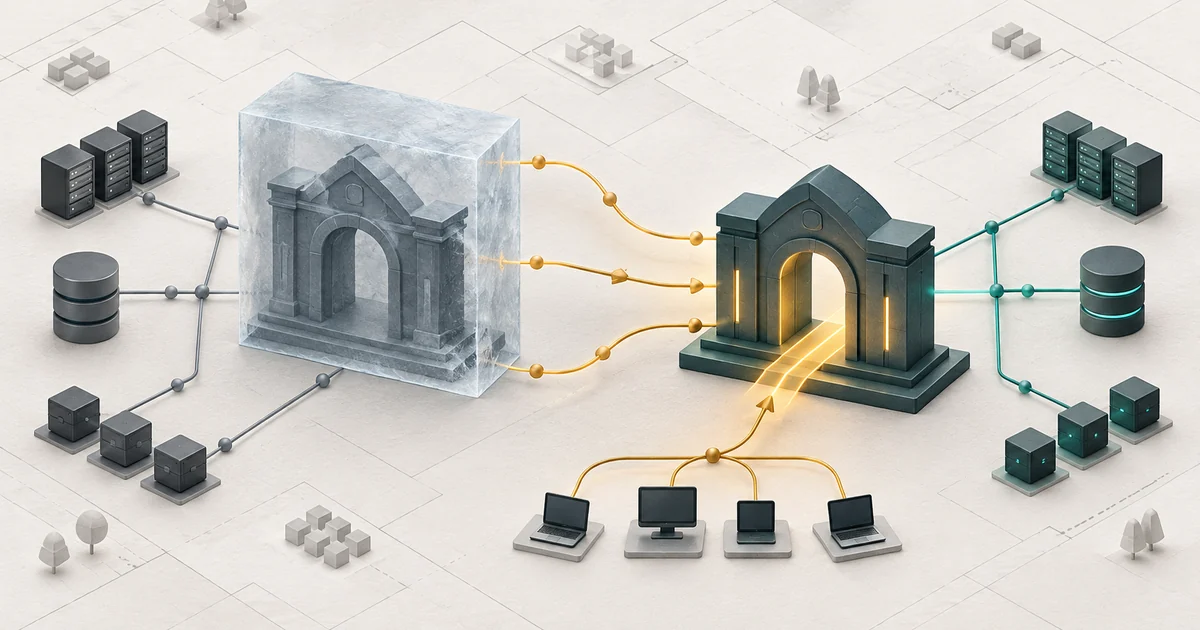
Quack changes the topology. The extension can serve a DuckDB session over HTTP, and another DuckDB can attach to it. The 2.0 preview adds CONNECT as the intended remote path and extends pushdown to PostgreSQL and MySQL. The maintainers say Quack is expected to graduate from its current beta state in 2.0.
This can remove a custom API from a small analytical service. It does not remove server work. Once DuckDB becomes a network dependency, the operator owns process supervision, TLS termination, authentication, authorization, network policy, timeouts, upgrades, backups, metrics, logs and capacity. The embedded engine remains simple; the service around it is not free.
Quack also is not distributed query processing. DuckDB's Quack FAQ explicitly says it does not currently distribute query execution across nodes. It is a remote protocol for a DuckDB server, not a cluster scheduler or a replacement for ClickHouse replication and sharding.
Quack's defaults are safe for local development, not multi-tenant production
Quack binds to localhost by default and generates a random connection token. Those are sensible safeguards against accidental exposure. The server itself does not terminate TLS; the project recommends a proven reverse proxy for every non-local deployment.
The more important boundary is authorization. A Quack server exposes the full SQL surface visible to its session, including reads and writes. Default token authentication establishes that the caller knows the token, while the default authorization callback permits every query. Custom authentication and authorization hooks exist, but the application must design and test them.
That makes an internet-facing default deployment unacceptable. A production pilot should:
- keep the DuckDB listener on loopback or a private interface;
- terminate TLS at a maintained reverse proxy and test long query and streaming settings;
- use separate, rotatable identities rather than one shared token;
- implement explicit query authorization and object scope;
- restrict the files, paths, network destinations and extensions visible to the DuckDB process;
- run with an operating-system identity that cannot reach unrelated secrets or files;
- cap CPU, memory, disk and query duration outside the SQL engine;
- log identity, query class, result status and resource use without leaking data or credentials.
Regex-only read filtering is not a durable authorization design for complex SQL. Prefer separate databases or serving processes for trust domains, constrained views, reviewed server-side query interfaces and OS-level isolation. Treat Quack's callback examples as building blocks, not a complete policy engine.
DuckDB does not sandbox untrusted SQL or untrusted database files
DuckDB's current security policy is unusually direct: SQL is executable code. A query can read and write local files, use the network, load native extensions and consume unbounded resources. The engine runs with the privileges of its host process and has no internal boundary for an untrusted user.
The same policy warns that data-file parsers assume a well-formed file from a trusted writer. A crafted or corrupted database, Parquet, CSV, JSON or lakehouse metadata file can crash the process or exhaust resources. Teams that accept third-party uploads should isolate parsing in a container, VM or DuckDB-WASM environment and promote only validated outputs.
Version 1.5.5 includes security patches alongside correctness and performance fixes. The repository publishes a security policy and private reporting route. Its public advisory page listed three historical moderate advisories when checked, the most recent from November 2025. No new advisory was presented as the reason for the 2.0 preview. An absence of a new advisory is not evidence that a nightly build is hardened.
The new storage format makes rollback a first-class test
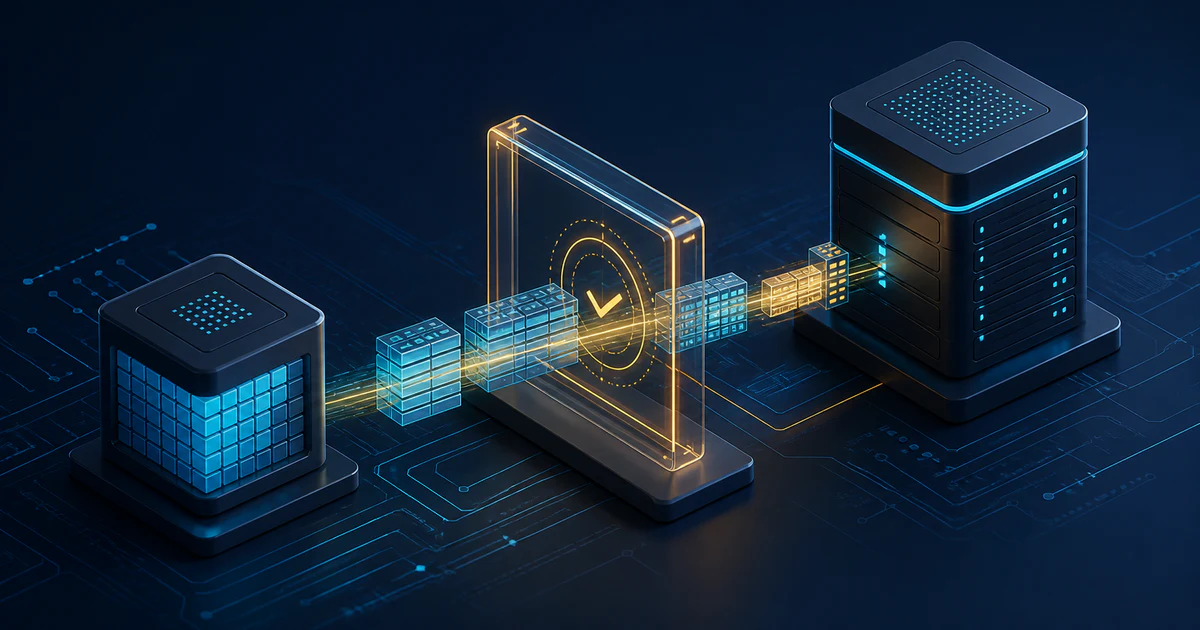
DuckDB 2.0 changes the default storage format to v2.0.0. The preview highlights buffer-managed ART indexes, lazy column metadata, stronger corruption validation, compact deletes and default DICT_FSST string compression. Those changes target faster opening and lower memory use for wide tables and large indexes.
Newer DuckDB versions are designed to read older database files. The opposite direction is best effort. DuckDB's storage documentation says that a file written with a newer storage version may not open in an older release. That means “install 1.5.5 again” is not a complete rollback plan after a 2.0 process has written the file.
Preserve three artifacts before any preview test:
- a byte-for-byte copy of the original 1.5 database file;
- an
EXPORT DATABASEoutput or neutral Parquet export that can be imported independently; - a new preview-only database created from the export.
Never let the preview open the only writable production file. Validate logical row counts, null behavior, constraints, indexes, views, macros and representative query results after import. Then prove that the old service can resume from the untouched file or a tested neutral-format restore.
Parser compatibility deserves its own test suite
DuckDB 2.0 makes the PEG-based parser the default. The project expects normal queries to remain compatible and asks users to file issues when they are not. The parser also enables better error locations and extension-defined grammar.
One breaking change is already documented: the older x -> x + 1 lambda syntax produces a warning in 1.5 and becomes an error in 2.0 unless a compatibility setting is enabled. A migration cannot rely only on queries observed in application logs; generated SQL, dbt models, notebooks, saved BI queries, macros and extension grammar all need coverage.
DuckDB 1.5 can enable the PEG parser experimentally. Use that to move parser discovery earlier without moving the storage layer or runtime at the same time. Fix deprecation warnings now, then compare parsed output and results for the full query corpus. Compatibility mode is a temporary bridge, not a reason to retain deprecated syntax indefinitely.
The feature set is valuable, but scope it to real jobs
Asynchronous I/O for object storage
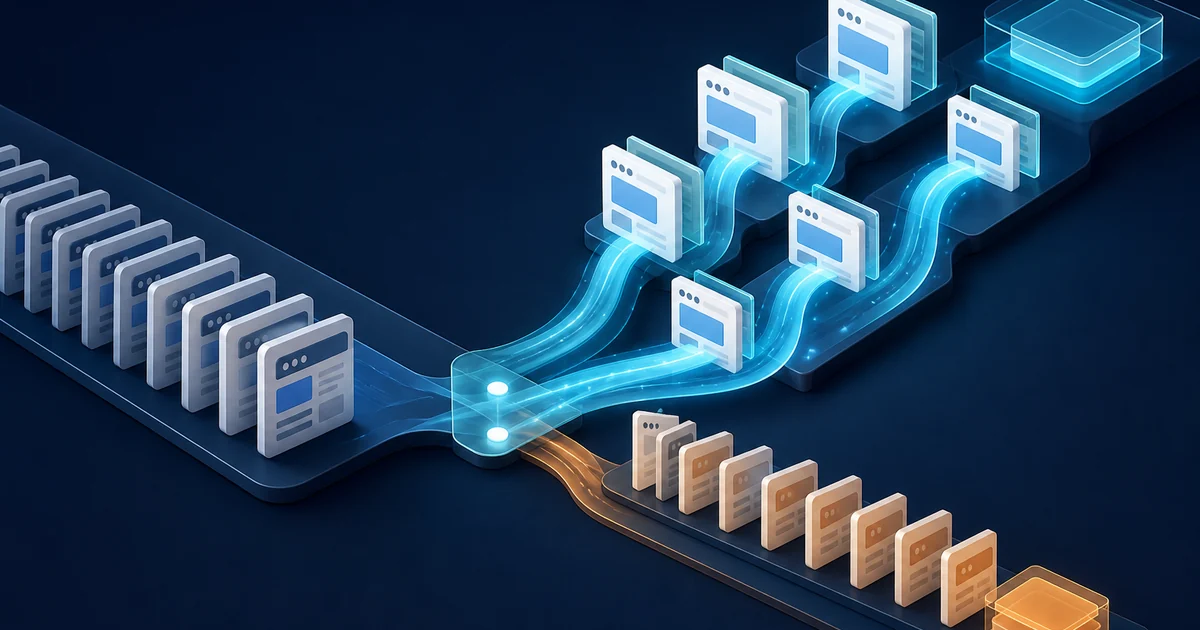
DuckDB 2.0 introduces asynchronous I/O across remote Parquet reads, followed by CSV, native DuckDB files and Parquet writes. The project expects the largest gains when network storage limits throughput. This is relevant to teams querying S3 or lakehouse data, but the right acceptance metric is the target workload's p50 and p95 latency, bytes read, object-store requests, CPU, memory and spill behavior.
Do not turn the maintainers' benchmarks into your capacity plan. The preview also reports an approximately 40-fold improvement for one recursive-CTE graph microbenchmark. That is a project-published result for one query, not an independent general performance claim.
VARIANT, triggers and richer SQL
The binary VARIANT type arrived in 1.5; 2.0 extends shredded storage execution, pushdown and Parquet read/write paths. It is promising for evolving event payloads and logs, especially when filters can avoid reconstructing the entire value.
Triggers add BEFORE and AFTER, row- and statement-level execution and transition tables. They can support audit records and derived behavior in a long-running DuckDB service. They can also hide side effects and increase migration complexity. Test recursion, ordering, bulk writes, failure rollback and observability before adopting them.
Other SQL additions—nearest-neighbor joins, data modification inside CTEs, nested schemas, JSON mutation and recursive CTE improvements—are useful only if they remove application code or measurable bottlenecks. Avoid upgrading a production database solely because a feature list is long.
A more stable extension boundary
DuckDB extensions have often targeted an unstable C++ API and required rebuilding for each release. Version 2.0 broadens the stable C API, generates it from a versioned specification and adds symbol versioning. The preview also describes organization-controlled, signed extension repositories, though that repository feature was still work in progress on August 17.
This could materially reduce extension maintenance. It does not certify every current extension. Inventory the exact extension name, source, signature, platform, version and API used. Require a 2.0 build or explicit compatibility evidence. Treat community extensions as native third-party code running in the host process.
Client availability is not yet uniform
The preview page provides 2.0 development builds for the CLI and C/C++ on Linux, macOS and Windows, plus Python prereleases. Java documentation shows a snapshot workflow, R points to the current source repository, and a nightly release for the newer Node.js driver is not available there.
That asymmetry matters more than a successful CLI smoke test. A production stack can include Python ingestion, Java services, Node notebooks, ODBC dashboards, R analysts and WASM clients. The upgrade is ready only when every required client and extension uses a compatible engine and the same file semantics.
Record primary versus secondary client support from the current client matrix. Pin package versions and native artifacts together. Do not let --pre, latest, a floating Docker tag or an extension auto-update select a different build between test runs.
Cost, privacy, licensing and lock-in
DuckDB core, its primary clients and core extensions use the permissive MIT license. There is no mandatory software license fee for self-hosting the engine or Quack. DuckLabs sells optional commercial support and feature-prioritization services; using them is a procurement choice, not a runtime requirement.
The infrastructure bill depends on topology. Embedded DuckDB consumes the host application's CPU, memory and disk. A Quack service adds an always-on process, reverse proxy, certificate automation, monitoring, logs, backups and possibly separate instances for isolation and recovery. Remote object-store analytics adds request, transfer and storage charges even when the database software is free.
Data can remain local in embedded mode, but DuckDB can reach files, cloud storage and networks through queries and extensions. Quack sends SQL and results over the configured transport. Map every extension and remote source, keep secrets scoped, redact logs and verify that the reverse proxy does not buffer sensitive result sets to unintended storage.
The MIT license and open repository reduce legal lock-in. File-format forward compatibility, DuckDB-specific SQL, macros, extensions, VARIANT, triggers and Quack create technical coupling. Preserve neutral exports such as Parquet, keep schema and transformation logic in version control, and test an alternative reader. Portability is a maintained practice, not a property granted once by the license.
What DuckDB 2.0 should be compared with
| Option | Prefer it when | Main trade-off |
|---|---|---|
| DuckDB 1.5.5 | You need current stable embedded analytics and can wait for 2.0 | Misses the finished 2.0 server, parser, storage and extension changes |
| DuckDB 1.4 LTS | Stability and a documented support line outweigh 1.5 features | Older feature set; current community support window is finite |
| DuckDB 2.0 preview | You need compatibility discovery or want to evaluate upcoming remote analytics | Nightly churn, incomplete client matrix and no production support claim |
| PostgreSQL | The primary job is concurrent transactional service, roles and mature operations | Analytical scans often need a different layout or companion engine |
| ClickHouse | The job requires a mature distributed analytical server and scale-out operations | Higher operational weight than an embedded DuckDB process |
| Polars | The job is an in-process dataframe pipeline rather than a persistent SQL database | Different query, storage and concurrency model |
| SQLite | The job is lightweight embedded transactional storage | Row-oriented design is not a substitute for DuckDB's analytical engine |
The most credible architecture may remain mixed: PostgreSQL for transactional authority, open columnar files for exchange and DuckDB for embedded or bounded analytical work. Quack should replace another service only after it proves a simpler total system, not merely a faster demo query.
A practical 2.0 evaluation plan
1. Freeze the production baseline
Record the exact DuckDB 1.5.5 or 1.4 LTS engine, every language client, extension, storage version, operating system and architecture. Capture representative query plans, results, latency, memory, disk use and failure behavior.
2. Build the complete query corpus
Collect application SQL, generated queries, notebooks, BI extracts, macros, migrations and administrative commands. Add negative cases and deprecation warnings. Enable the PEG parser in 1.5 where possible and remove the old lambda syntax before the main upgrade.
3. Create a disposable migration copy
Copy the database file, export to a neutral directory and import into a new preview-only file. Pin the exact 2.0 nightly artifact or commit. Never open the sole production file with a preview writer.
4. Certify data and extensions
Compare schema, row counts, checksums for critical tables, null and timezone behavior, constraints, indexes, views, macros and output files. Install only reviewed extensions and verify their signatures, APIs and platform builds.
5. Test the client matrix
Run the same contract tests through every supported application client. Reject the upgrade if one required runtime has no compatible pinned package, even if the CLI succeeds.
6. Evaluate Quack as a hostile boundary
Start local-only. Add a reverse proxy, TLS, individual credentials, deny-by-default authorization, restricted filesystem and network access, resource limits and structured logs. Test invalid tokens, unauthorized SQL, long queries, client disconnects, proxy restarts, oversized requests and token rotation.
7. Load-test the real workload
Measure concurrent readers and writers, conflict behavior, p50 and p95 latency, throughput, memory, spill, disk growth, object-store requests and recovery time. Compare Quack against the existing service and a PostgreSQL or ClickHouse baseline where relevant.
8. Rehearse rollback and restore
Stop the preview service, restore the untouched 1.5 file and verify the old application. Separately restore from the neutral export. Time both paths and document the data-loss window. A rollback that depends on an older binary opening a 2.0-written file is not proven.
9. Wait for the stable release gate
Repeat the entire suite on the final 2.0 release and final client packages. Review release notes, breaking changes, supported versions and new advisories. Canary with non-critical data before promoting the new storage format.
Measurable adoption criteria
Adopt DuckDB 2.0 only when all of these are true:
- the stable 2.0 release, not a nightly build, is pinned across every required runtime;
- the full query corpus produces approved results and no unresolved parser regression;
- every required extension is signed, compatible and reproducibly sourced;
- the copied database passes integrity checks and the storage transition has a tested restore path;
- Quack, if used, is private by default, TLS-fronted and deny-by-default for authorization;
- resource ceilings prevent one query from exhausting the host;
- backup, restore, monitoring and incident runbooks pass a rehearsal;
- measured performance or architectural simplification justifies the migration cost.
Reject or defer the migration if a required client is missing, an extension still relies on an unverified build, untrusted SQL reaches the engine, the only rollback depends on forward file compatibility, or the team cannot own a database service boundary.
Final recommendation
For embedded DuckDB users, 2.0 is a migration to prepare, not fear. The parser and default storage changes make early compatibility testing worthwhile, while backward reading of older files and neutral export paths support a controlled transition. Fix warnings in 1.5 and build the test corpus now.
For teams considering Quack, the key question is not whether DuckDB can listen on a port. It is whether a DuckDB service with explicit authorization, TLS, isolation, monitoring, backup and recovery is simpler than the server you already operate. Quack may be a strong fit for bounded internal analytics. It should not inherit internet exposure or multi-tenant trust by accident.
Stay on 1.5.5 or the applicable 1.4 LTS release for production today. Use the 2.0 preview only on copied workloads with pinned artifacts. Promote after the stable release and after your own failure tests—not after a benchmark, a feature list or a popular discussion.
Sources
- A Preview of DuckDB v2.0 — Mark Raasveldt and Hannes Mühleisen, DuckDB, August 17, 2026; 2.0 feature and breaking-change preview; accessed August 18, 2026.
- DuckDB release calendar — DuckDB Foundation; stable, LTS and tentative 2.0 dates; accessed August 18, 2026.
- Announcing DuckDB 1.5.5 — DuckDB team, July 22, 2026; current stable release and fix summary.
- DuckDB preview installation — DuckDB documentation; 2.0 nightly status and client availability; accessed August 18, 2026.
- Development roadmap — DuckDB maintainers, updated August 2026; parser, Quack, async I/O, client API and lambda deprecation plans.
- Quack Remote Protocol overview — DuckDB documentation for the current beta protocol; accessed August 18, 2026.
- Quack security model — DuckDB documentation; exposure, TLS, authentication and authorization defaults; accessed August 18, 2026.
- Quack extension limitations — DuckDB documentation; beta status in 1.5 and expected 2.0 graduation; accessed August 18, 2026.
- Quack FAQ — DuckDB; server scope and lack of distributed query processing; accessed August 18, 2026.
- Storage versions and format — DuckDB documentation; backward and forward compatibility, explicit storage versions and export/import migration.
- PEG parser — DuckDB documentation; 1.5 opt-in and planned 2.0 default.
- Client overview — DuckDB documentation; support tiers, current versions and cross-client file compatibility; accessed August 18, 2026.
- DuckDB security policy — DuckDB repository; trust boundary for SQL, files and extensions; accessed August 18, 2026.
- DuckDB public security advisories — GitHub; published repository advisories observed August 18, 2026.
- DuckDB MIT license — DuckDB repository; current source license; accessed August 18, 2026.
- DuckDB commit history — official repository activity checked August 18, 2026.
- Hacker News discussion: A Preview of DuckDB v2.0 — community discussion posted August 17, 2026; trend signal only.
- Reddit discussion: A Preview of DuckDB v2.0 —
r/programming, August 17, 2026; independent adoption signal only.
Build a stack for this use case.
Answer nine practical questions and compare three transparent architectures with costs, free limits, lock-in, and migration paths.
Build my stack